Mastering Complex Spaces: A Custom L-Shaped Patio Cover for a High-Rise Balcony
The Challenge
Complex 90-Degree Corners and High-Altitude Safety Hazards
A homeowner in Xinjiang possessed a massive, beautiful high-rise balcony but faced several strict environmental challenges. First, they needed robust protection against harsh winds, rain, and intense UV rays. More importantly, living in a high-rise building meant there was a severe safety risk from potential high-altitude falling objects (falling debris from upper floors). The client required a canopy roof that was exceptionally shatterproof.
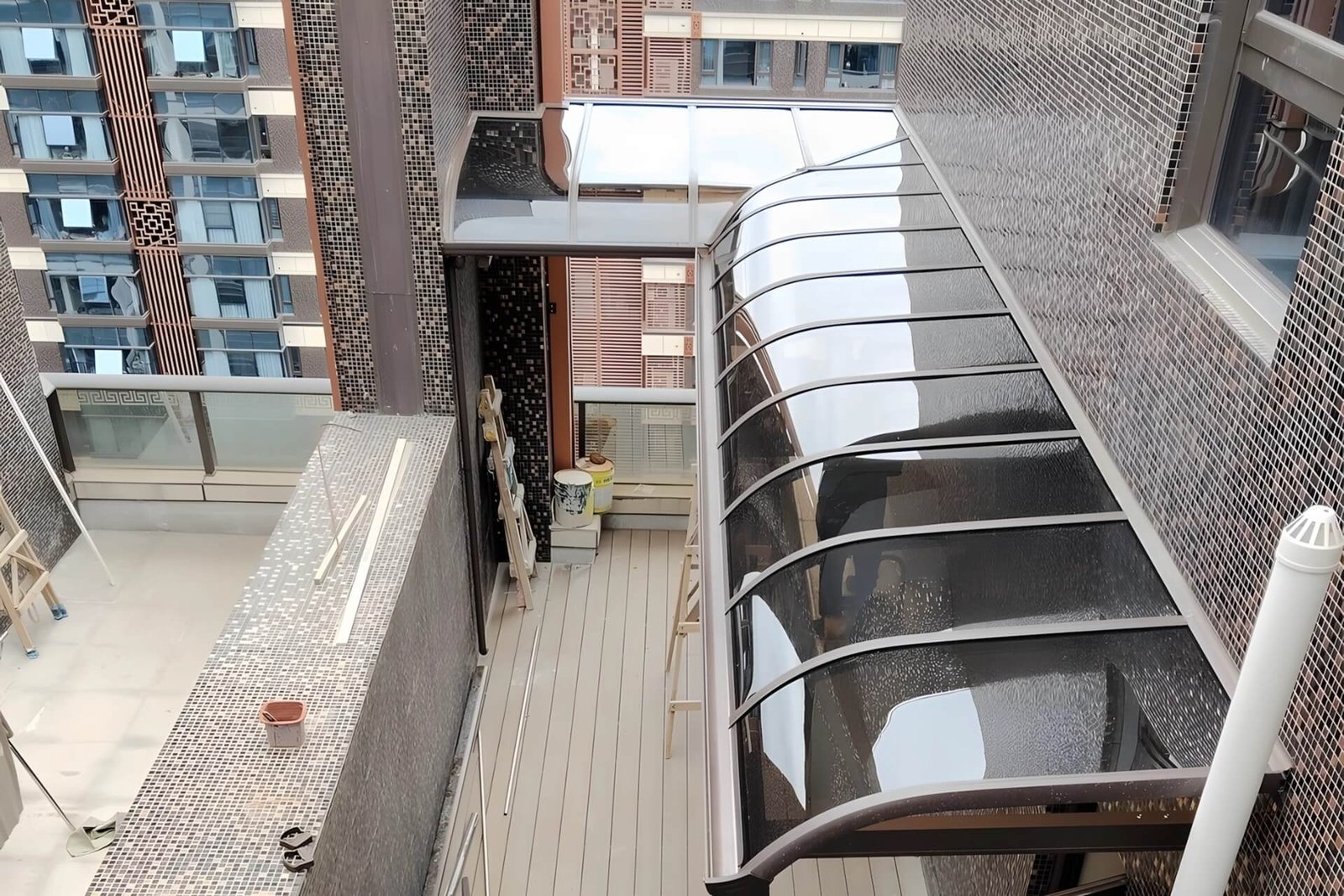
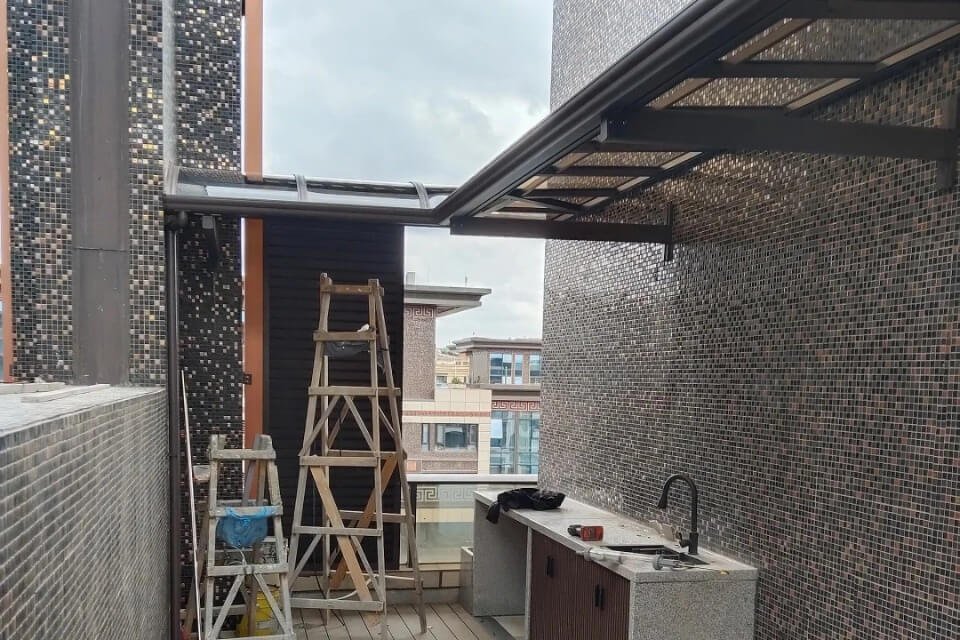
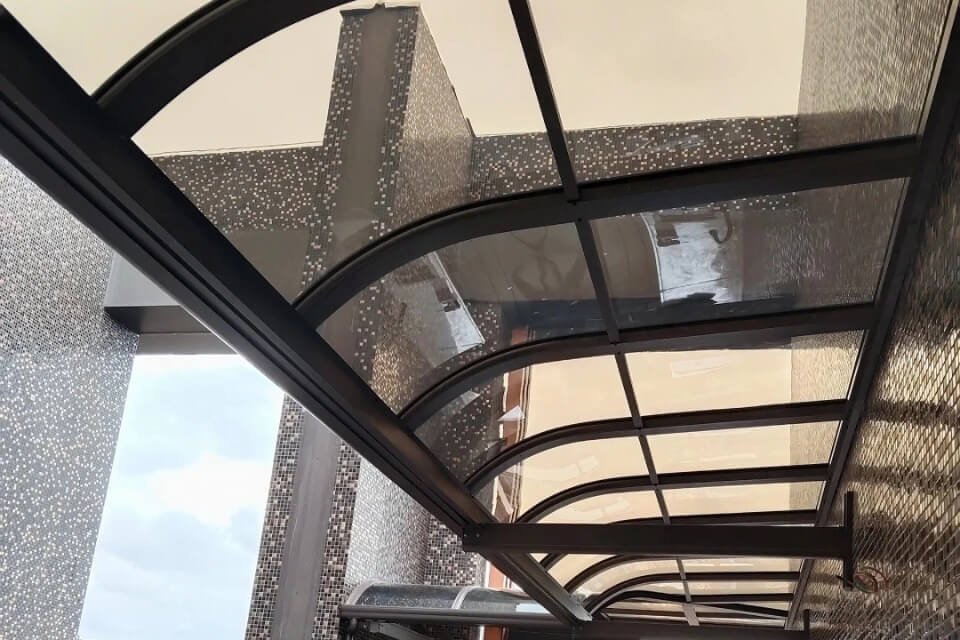
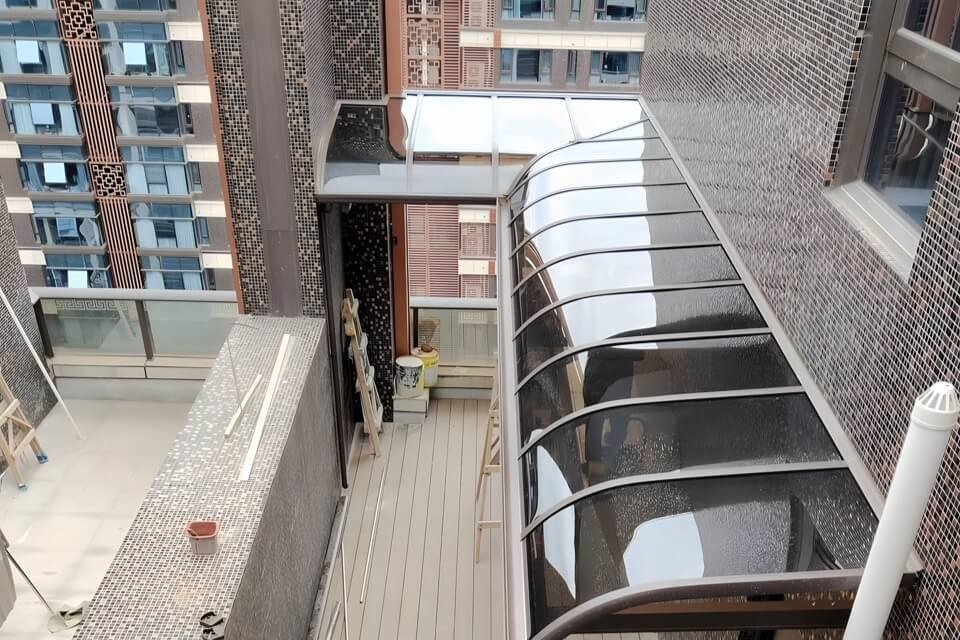
The biggest hurdle, however, was the balcony’s unique architectural layout, which required a precise 90-degree right-angle corner canopy. The client had consulted multiple local and online awning suppliers, but all of them rejected the project, stating that manufacturing and perfectly sealing a custom L-shaped connection was too complex for their standard production lines.
The Solution
Bespoke Engineering and Turnkey Installation
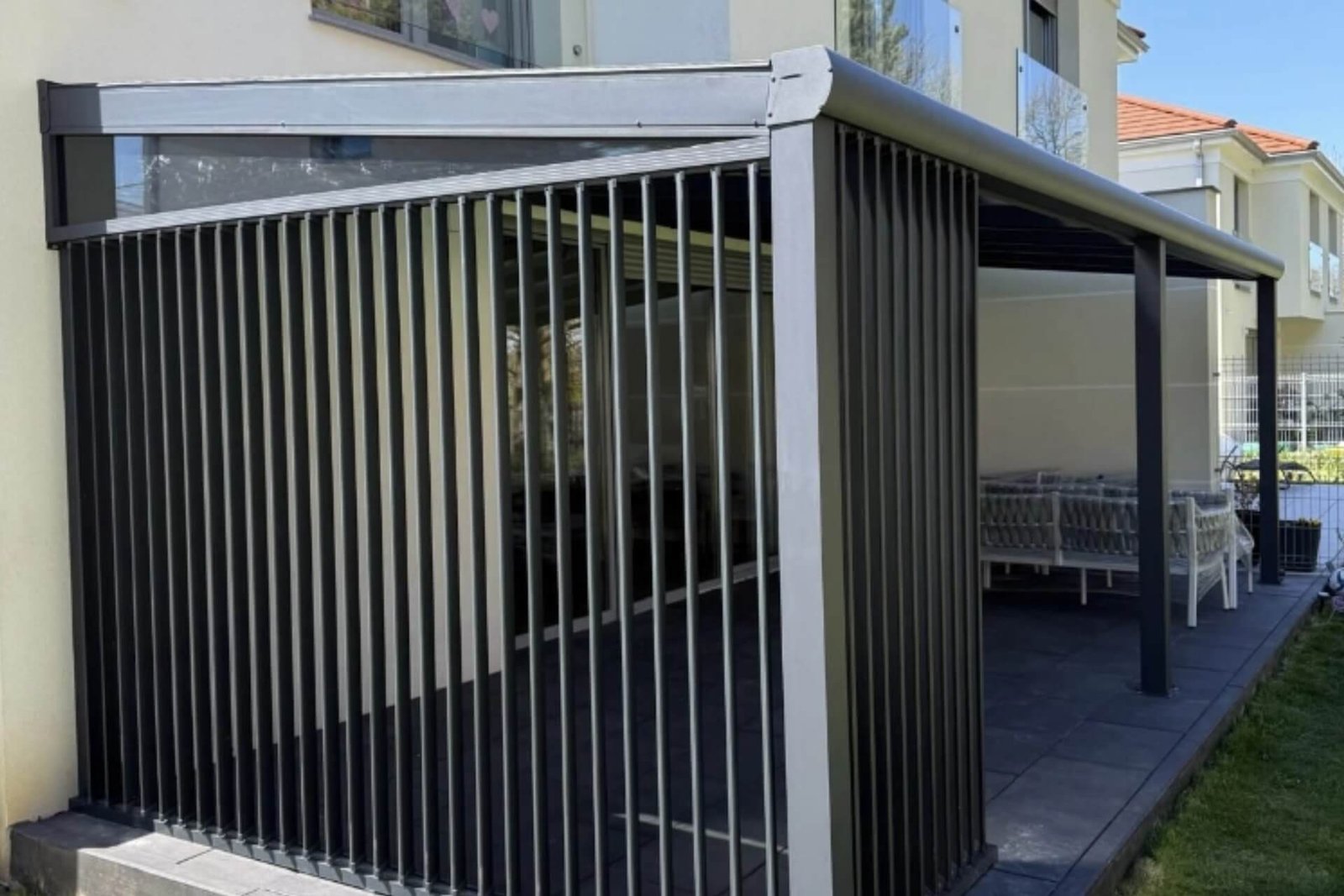
Frustrated by the lack of options, the client finally reached out to our team. Understanding their pain points, we immediately assigned a dedicated senior engineer to follow up. Through patient communication and precise measurement analysis, our factory customized a heavy-duty L-Shaped Aluminum Patio Cover specifically tailored to their balcony’s dimensions.
To address the safety concerns regarding falling objects, we utilized premium, extra-thick imported polycarbonate (PC) panels, which offer extreme impact resistance—far exceeding standard glass. Our structural engineers ingeniously designed a seamless right-angle transition, ensuring 100% waterproof sealing and structural integrity at the corner.
To deliver the ultimate customer experience, we dispatched our professional installation team to provide free on-site installation. The final result is a structurally flawless, aesthetically pleasing continuous canopy that fully protects the client’s outdoor living space, proving that no custom project is too complex for our manufacturing capabilities.
More Industry Insights
Solar-Ready Aluminum Carports: The Complete Guide to PV Integration and EV Charging Infrastructure
Plan a solar-ready aluminum carport for commercial parking. Covers structural…
Site Preparation and Installation Planning for Commercial Aluminum Structures
Plan your commercial aluminum structure installation with confidence. Covers foundation…
Aluminum Outdoor Structures Compared: Choosing the Right Shade Solution for Your Commercial Project
Compare aluminum pergolas, carports, canopies, and patio covers for commercial…