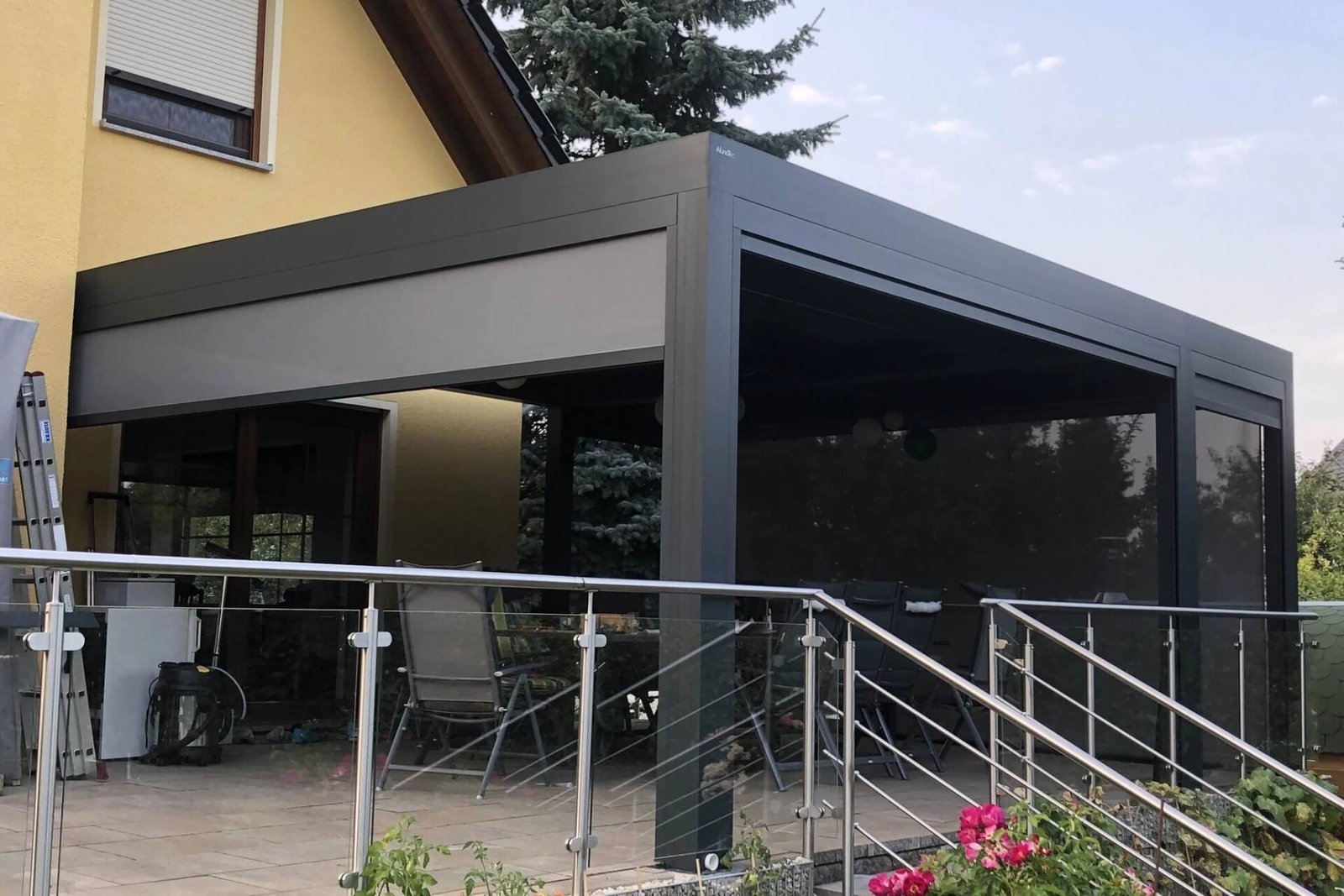
The outdoor architecture landscape is undergoing a structural transformation—not just in design language, but in how outdoor spaces are engineered, automated, and commercialized. Gone are the days when a simple canvas awning or a static wooden trellis could satisfy the demands of luxury homeowners, hospitality venues, and mixed-use developments.
As we move deeper into 2026, one product category has unequivocally captured the attention of architects, contractors, and B2B distributors worldwide: the motorized bioclimatic aluminum pergola.
The numbers tell a compelling story. The global bioclimatic pergola market was valued at approximately USD 555.1 million in 2024 and is projected to reach USD 821.2 million by 2030, growing at a robust CAGR of 6.7%. A separate long-range analysis values the 2025 market at USD 594.11 million, with projections reaching USD 1,167.01 million by 2034—representing a sustained 7.79% CAGR through the forecast period.
But market growth alone does not explain why this product category has become the most strategically important line item in the outdoor living supply chain. This comprehensive guide examines the engineering foundations, market dynamics, smart technology integration, and sourcing strategies that B2B buyers need to understand in 2026.
1. The Structural Shift: From Seasonal Shade to 365-Day Living Space
Historically, outdoor spaces were highly seasonal. A sudden rainstorm or intense midday sun could render a beautiful patio completely unusable—costing restaurants thousands in lost revenue and leaving homeowners frustrated with underutilized square footage.
The bioclimatic pergola fundamentally redefines this equation by providing dynamic, on-demand weather protection. With motorized adjustable louvers, users can effortlessly control sunlight, ventilation, and rain protection at the push of a button. When closed, the interlocking louvers form a completely waterproof roof, channeling water through integrated gutter systems hidden within the structural posts.
This capability transforms a seasonal patio into a guaranteed 365-day living space. In jurisdictions across North America and Europe, this transformation has regulatory implications: increasingly, bioclimatic pergolas are classified as permanent architectural elements subject to building code requirements for wind and snow loads. This elevates the importance of structural engineering in product selection—a topic examined in detail in Section 3.
The Four-Season Value Proposition
The operational versatility of a motorized louvered roof creates distinct value across all four seasons:
- Spring: Partially opened louvers enable natural ventilation while providing protection from intermittent rain showers. Integrated wind sensors automatically retract side screens when gusts exceed preset thresholds.
- Summer: Louvers angled to deflect direct solar radiation while permitting air circulation reduce ambient temperatures beneath the structure by up to 5–8°C compared to unprotected areas. This passive cooling effect directly reduces reliance on energy-intensive air conditioning for adjacent indoor spaces.
- Autumn: Fully closed louvers create a weatherproof canopy, allowing continued use of outdoor dining areas and terraces as temperatures drop. Optional infrared heating panels extend comfortable occupancy through late-season months.
- Winter: When louvers are closed and locked, the interlocking profile design sheds snow and prevents ice accumulation. Engineered drainage channels prevent freeze-thaw damage to the louver mechanism.
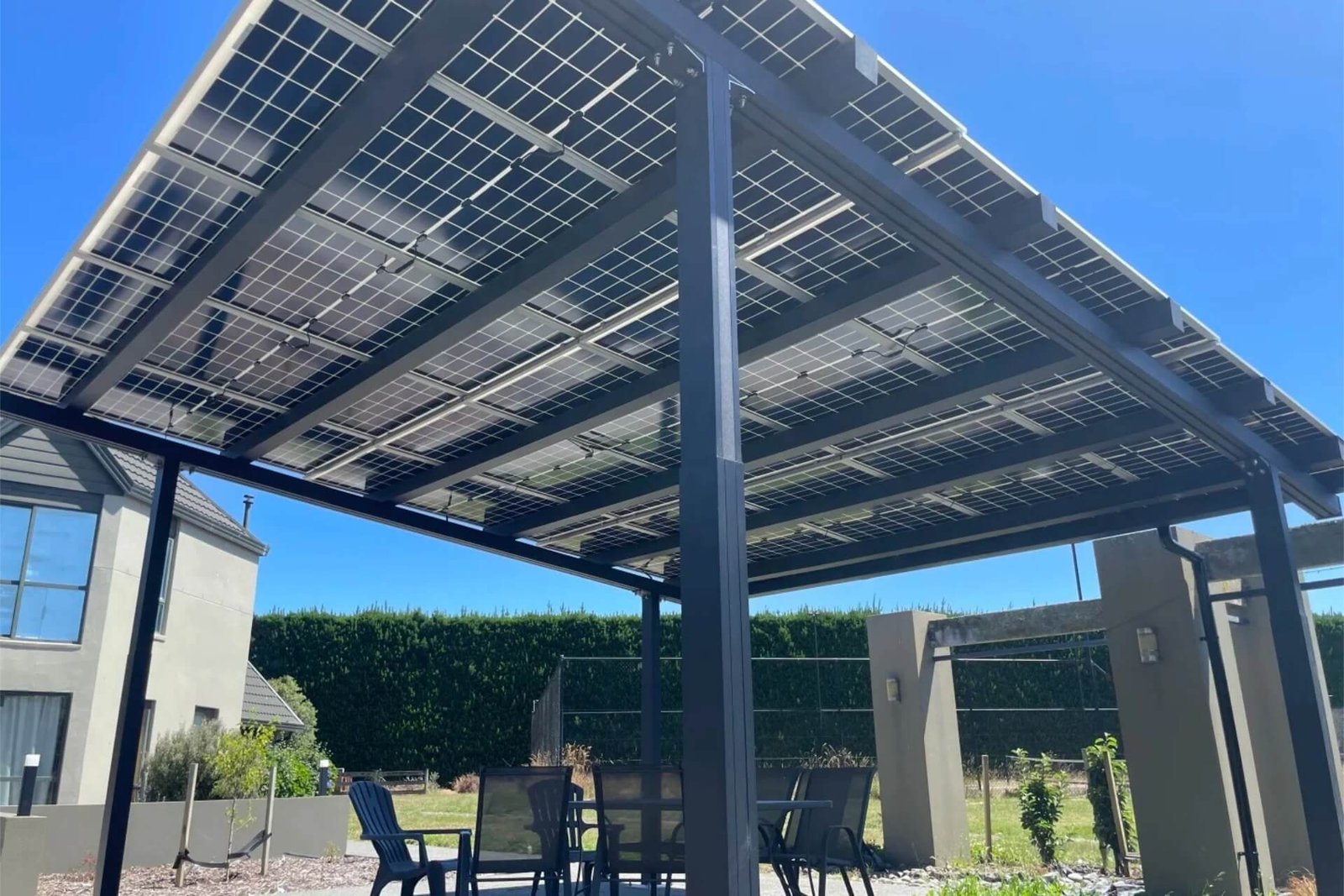
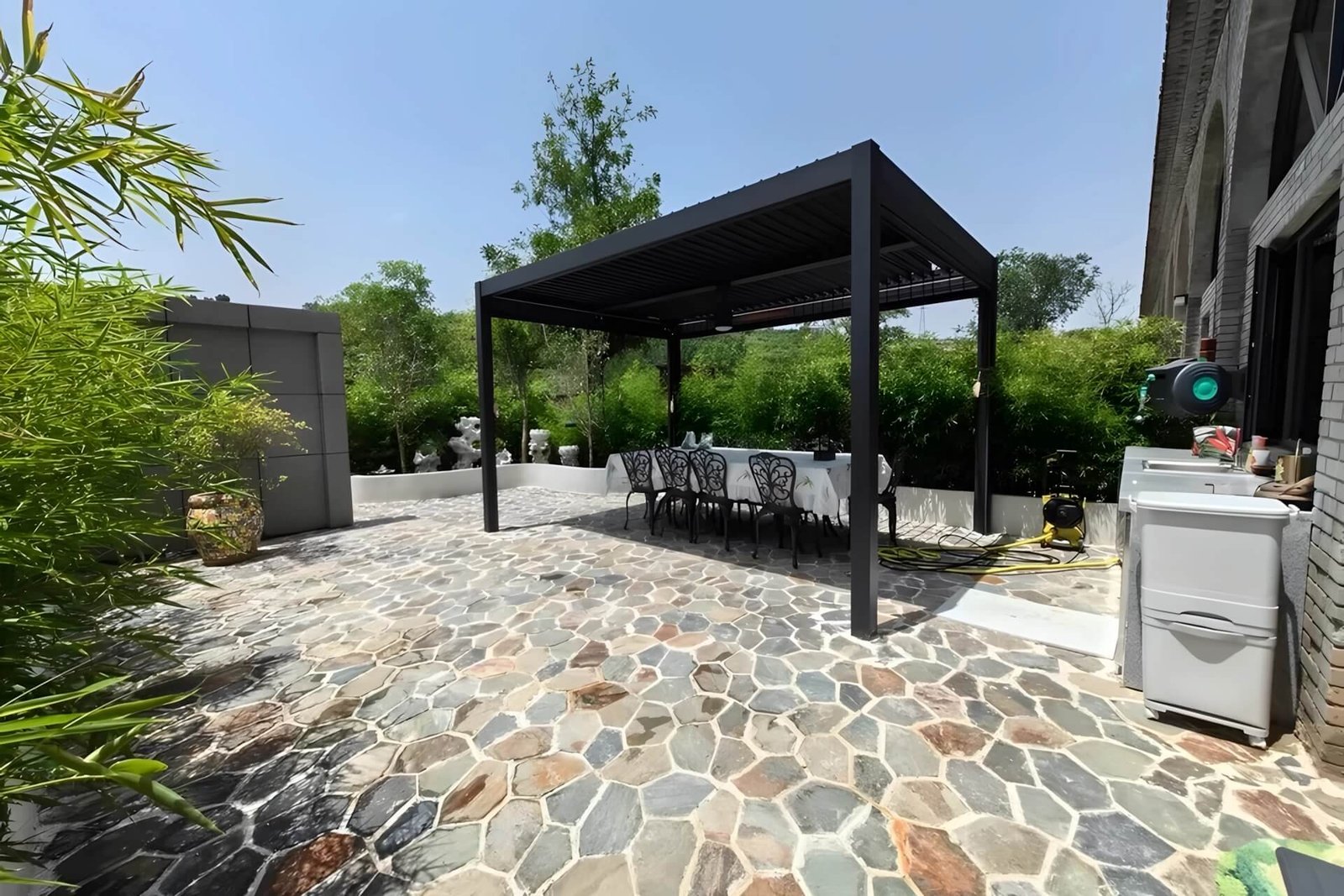
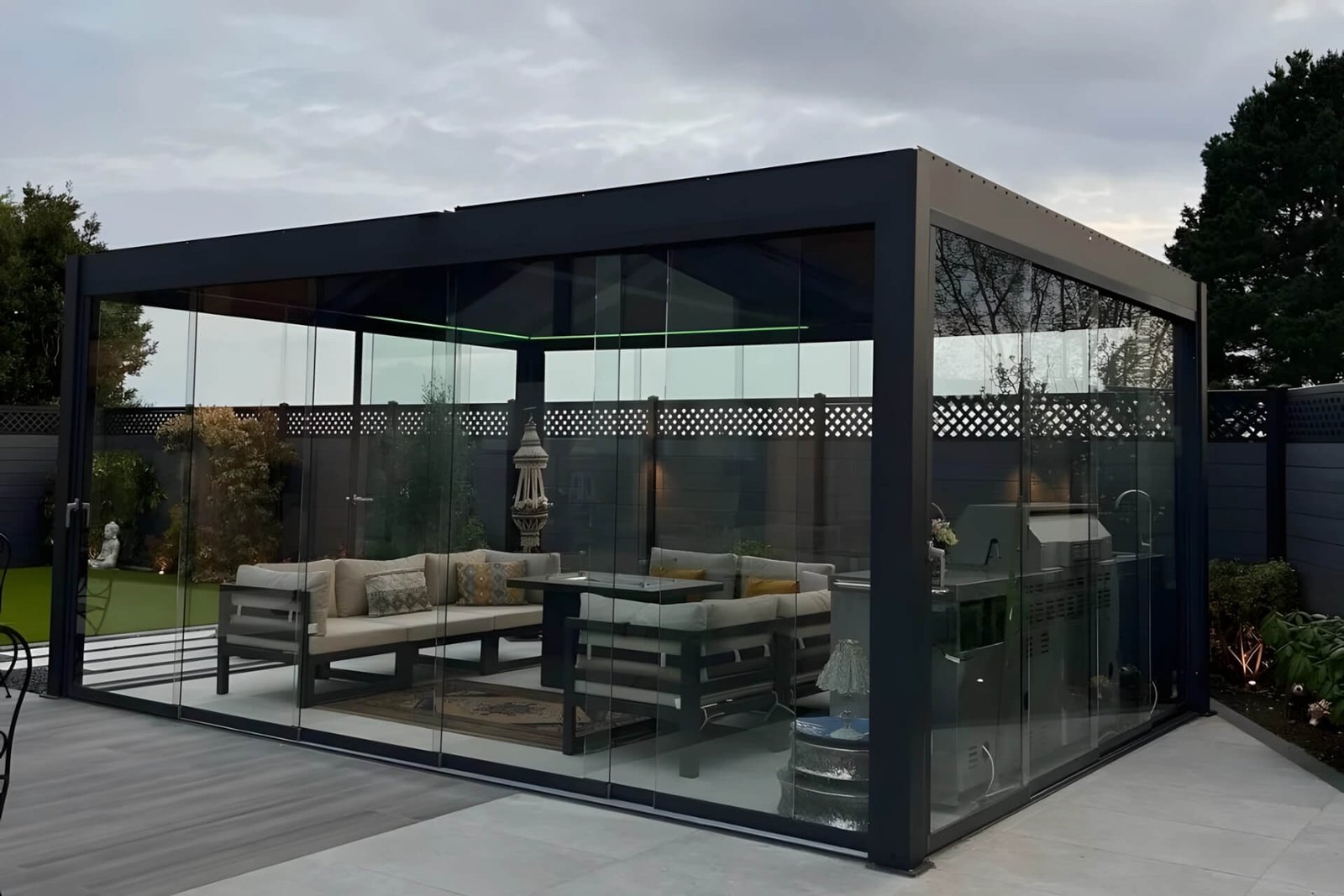
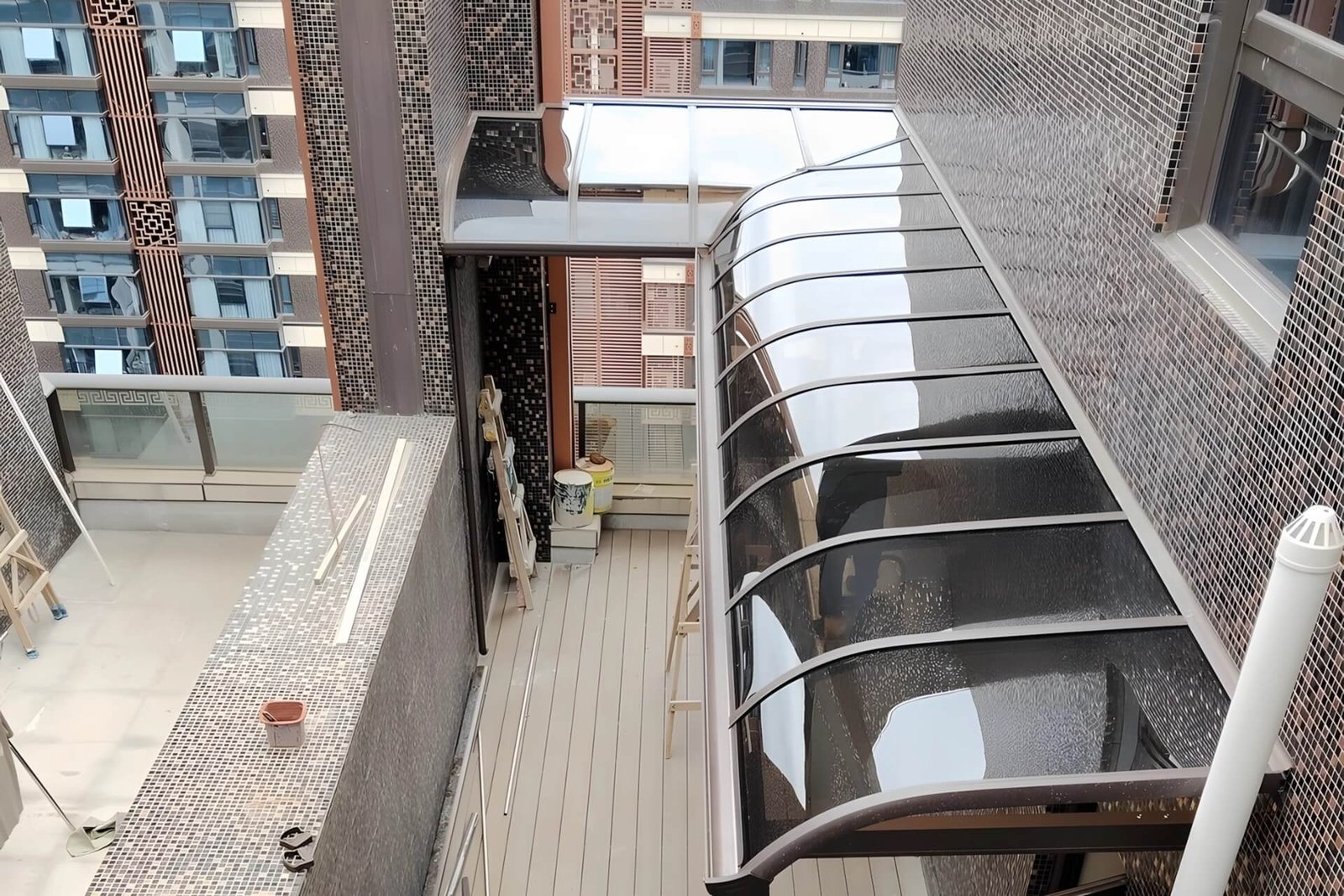
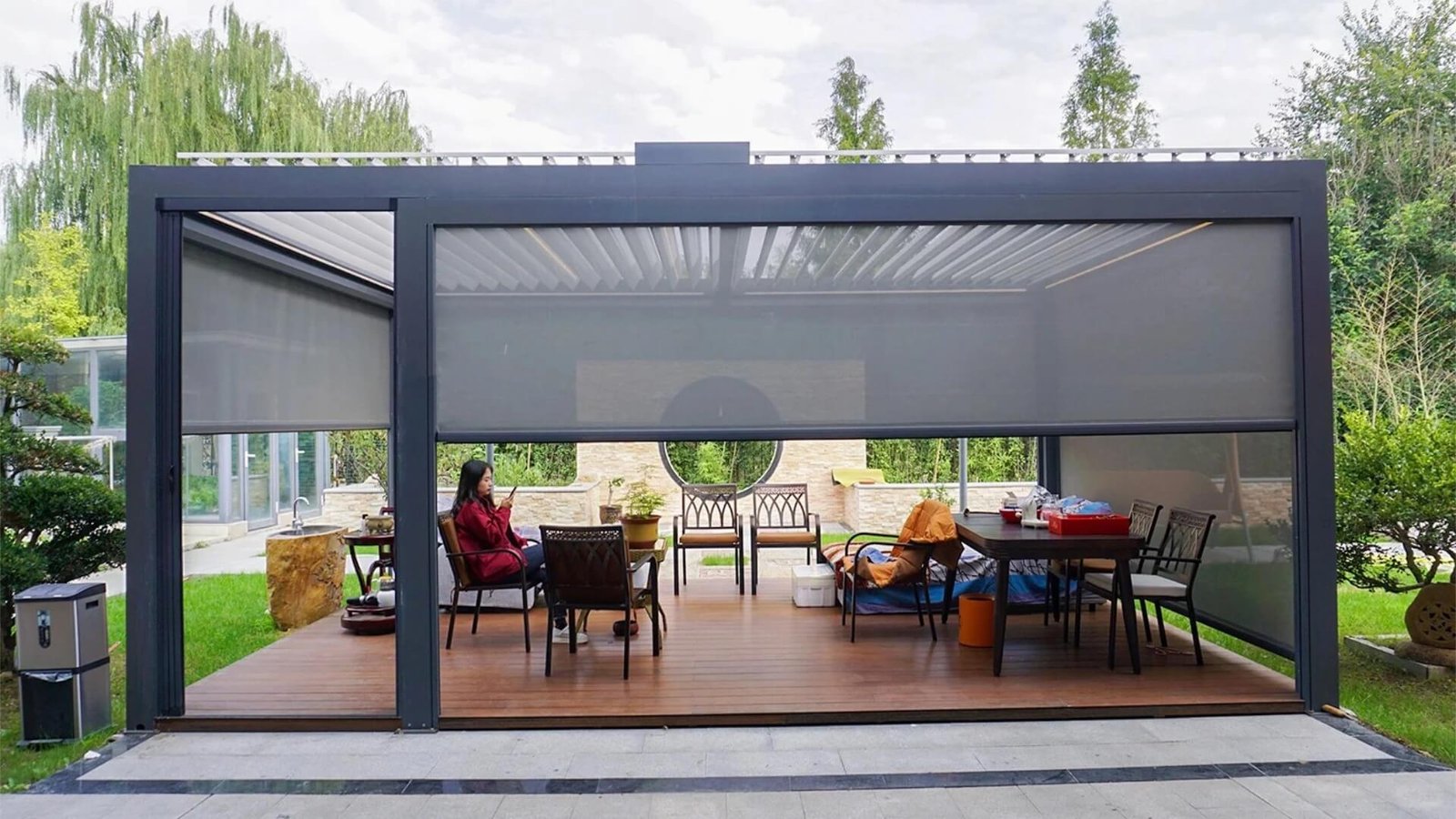
Bioclimatic pergolas are gaining global momentum as premium architectural structures that offer flexible, climate-responsive outdoor environments for both residential and commercial applications. Designed with motorized adjustable louvers, integrated sensors, and weather-adaptive controls, these pergolas optimize natural ventilation, solar shading, and rain protection—transforming outdoor areas into comfortable, usable spaces across changing weather conditions.
2. Market Dynamics: Why 2026 Is the Inflection Point
2.1 Regional Growth Hotspots
Europe currently leads the global bioclimatic pergola market, particularly in France, Italy, Germany, and Spain, where outdoor lifestyle culture and architectural integration drive sustained demand. North America is experiencing strong growth acceleration, especially in high-income urban and suburban zones investing in premium outdoor living enhancements.
In the Middle East, demand is fueled by luxury hospitality developments and climate-responsive architecture designed to create usable outdoor environments in extreme heat conditions. Asia-Pacific represents an emerging opportunity, driven by rising disposable incomes, urban rooftop utilization, and increased interest in smart exterior design.
Key adopters span both residential and commercial segments. In the residential sector, luxury and mid-high housing categories drive volume. Commercially, hospitality venues—hotels, restaurants, cafes, and event spaces—seek ambiance, climate control, and extended service areas.
2.2 Technology-Driven Demand Acceleration
Three converging trends are propelling bioclimatic pergola adoption in 2026:
Smart Home Integration. The integration of lighting, heating, rain sensors, and automation systems positions bioclimatic pergolas as smart infrastructure aligned with architectural trends in sustainable and experience-driven design. Motorized pergolas now integrate seamlessly with smart home ecosystems via app-based or voice-controlled platforms, enhancing user convenience and operational efficiency.
Post-Pandemic Outdoor Living. The lifestyle shift toward outdoor wellness, hybrid socialization, and multifunctional living spaces—accelerated during the pandemic—has persisted as a durable consumer preference. Bioclimatic pergolas offer a high-value, low-maintenance solution that combines aesthetics with environmental adaptability.
Commercial ROI Drivers. For restaurants, hotels, and country clubs, a bioclimatic pergola represents capital investment with measurable return. A 50-seat outdoor terrace without weather protection loses those tables during rain or extreme heat, translating to thousands of dollars in unrealized weekly revenue. By installing a bioclimatic system, business owners effectively add permanent, weatherproof square footage—often recouping the investment within the first season of operation.
2.3 Shifting Aesthetic Expectations
Outdoor spaces are now designed with the same care as interiors. What was once an afterthought—somewhere to place a table or provide a bit of shade—is now a deliberate architectural element that defines gathering points, shapes how a space is experienced, and creates visual links between different areas. Function alone is no longer sufficient; shade structures are expected to contribute to the overall character of a space, driving demand for contemporary designs that blend visual appeal with structural integrity.
3. Engineering Fundamentals: What B2B Buyers Must Verify
Motorized pergolas are complex engineered products, not commodity shade structures-. For commercial installations, aesthetic appeal must be matched by structural integrity. Modern bioclimatic pergolas are feats of advanced engineering, utilizing premium materials and precision manufacturing to withstand harsh climates.
When evaluating a manufacturer, contractors and distributors should verify the following critical technical specifications:
3.1 Aluminum Alloy Selection: 6063-T5 vs. 6061-T6
The choice of aluminum alloy directly determines structural spanning capacity, durability, and suitability for specific applications.
6063-T5 offers excellent extrudability and smooth surface finish, making it the preferred choice for visually prominent architectural profiles and complex shapes-. It provides good strength while maintaining corrosion resistance and is widely used in residential pergola applications.
6061-T6 delivers substantially higher yield strength and fatigue resistance. For heavy-duty structural applications—commercial buildings, large-span pergolas, or installations in high-wind coastal zones—6061-T6 is the superior choice-. Marine-grade 6061-T6 withstands salt spray exposure approximately five times longer than architectural alloys without pitting-.
At Oudeoutdoor, we specify 6063-T5 for standard architectural profiles and offer 6061-T6 upgrades for projects requiring enhanced structural performance. Our engineering team selects profiles based on calculated section modulus and moment of inertia—not generic assumptions—ensuring that each structural member is optimized for its specific load path.
3.2 Wind and Snow Load Engineering
Bioclimatic pergolas installed in regulated markets must withstand design wind and snow loads per applicable structural standards. Key standards governing these structures include:
- ASCE/SEI 7 (USA): Referenced by the International Building Code (IBC), governing wind loads up to 150+ mph in hurricane-prone zones.
- EN 1991-1-4 (Europe): Eurocode wind actions, with nationally determined parameters per member state annex.
- AS/NZS 1170.2 (Australia/New Zealand): Wind actions up to 60 m/s (134 mph) in cyclonic regions.
A product rating of “120 mph” has engineering meaning only if it references a specific standard and the calculations, connections, and anchoring are designed accordingly. Buyers should request structural calculations, anchor specifications, and—for regulated markets—third-party certification documents before committing to large orders.
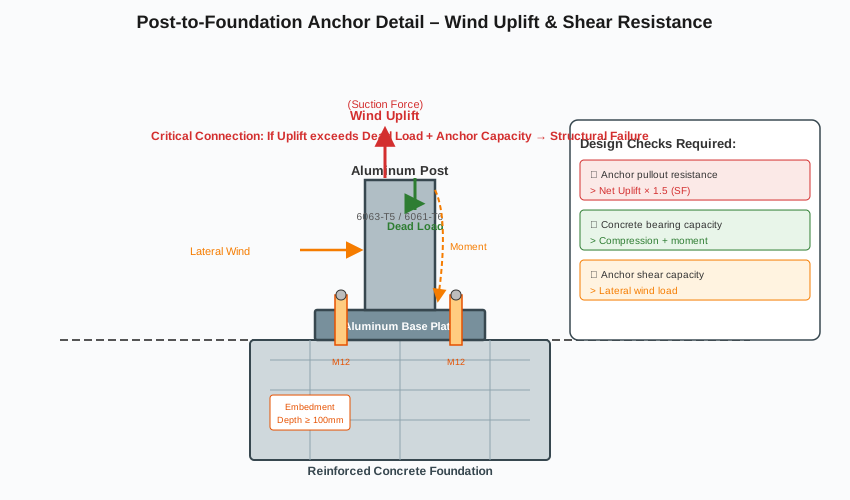
Wind uplift is frequently the governing load case for lightweight aluminum structures. Wind flowing over a roof surface creates negative pressure (suction), generating upward forces that can exceed the structure’s self-weight several times over. The post-to-foundation connection is the critical element: simply placing posts on patio pavers or using shallow footings is structurally inadequate for all but the lowest wind zones.
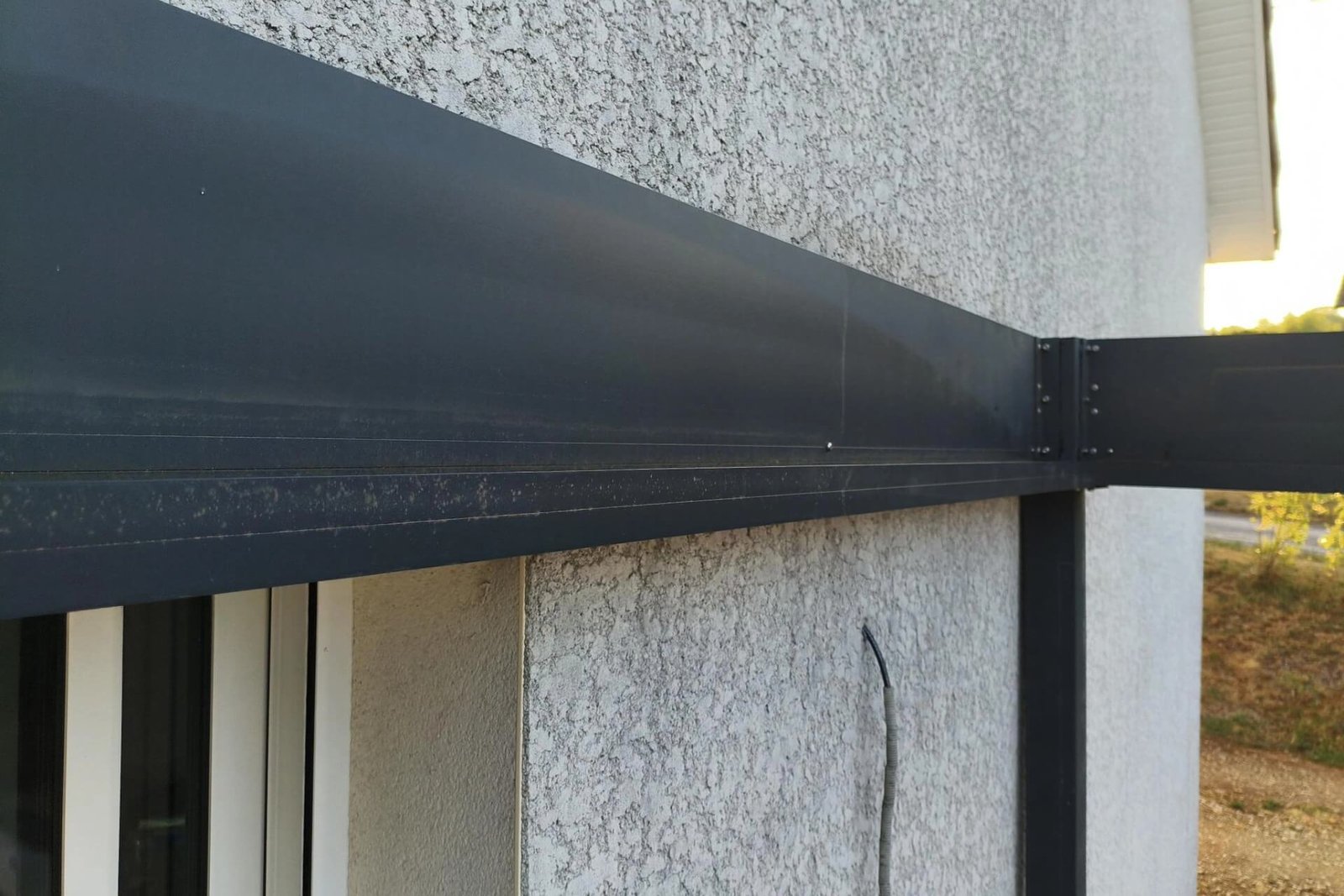
For wall-mounted designs, the ledger attachment to the existing structure introduces additional complexity. The connection must transfer both vertical loads and uplift forces into the host building without compromising its weather barrier or structural integrity. This requires engineering evaluation of the existing wall construction, appropriate fastener specification, and flashing details that maintain waterproofing.
3.3 Connection Design: Where Most Failures Begin
The most elegantly sized beams and posts are irrelevant if the connections between them cannot reliably transfer design loads. Structural failures in outdoor aluminum structures overwhelmingly initiate at connections, not in the members themselves.
Critical connection types requiring verified engineering include:
- Beam-to-post connections: Must simultaneously resist shear from vertical loads (snow, dead load), moment from lateral wind pressure, and tension from wind uplift. Bolted bracket connections using galvanized or stainless steel components provide positive mechanical engagement. Proprietary aluminum connectors offer clean aesthetics with engineered load capacity.
- Post-to-foundation anchors: Cast-in-place anchor bolts embedded in concrete during pouring provide the highest uplift capacity for new construction. Post-installed chemical anchors using epoxy-based systems offer excellent pullout resistance when anchoring to existing concrete. Surface-mounted base plates distribute uplift forces across multiple anchor points but are limited by substrate strength.
- Ledger attachments: For wall-mounted pergolas, the ledger-to-wall connection bears critical responsibility. Specification requires evaluation of the existing wall structure, appropriate fastener selection per the wall material, and proper flashing integrated with the building’s weather-resistant barrier.
Every component in the structural load path—from roof surface to foundation—passes through connections that must be designed for the full design load with an appropriate safety factor. When sourcing products for regulated markets, verification of connection engineering is non-negotiable.
3.4 Integrated Drainage Architecture
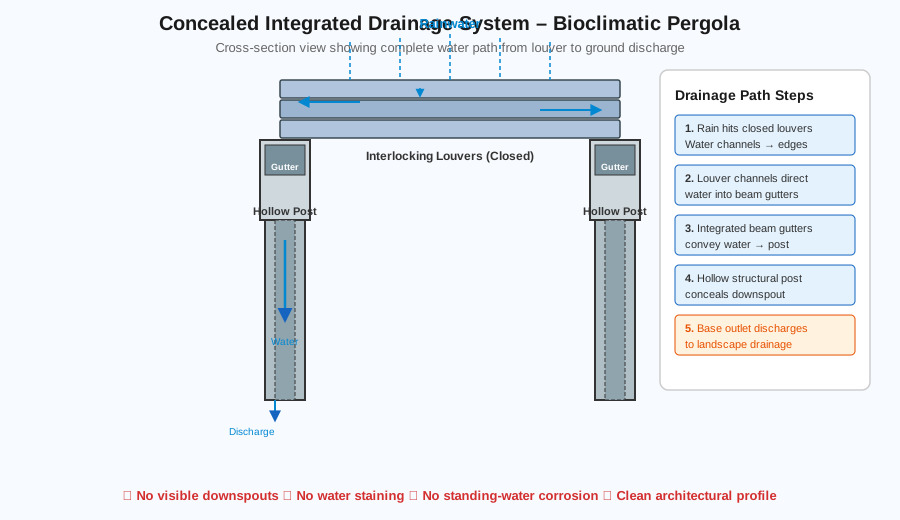
The waterproof performance of a bioclimatic pergola depends not only on the interlocking geometry of closed louvers but on the complete drainage path that manages captured rainwater. Engineered drainage in premium systems follows a defined chain:
- Louver channels: Individual louvers incorporate longitudinal channels that direct water laterally toward the beams when the roof is closed.
- Integrated beam gutters: Main structural beams house concealed channels that collect runoff from the louvers and convey it toward the posts.
- Post-integrated downspouts: Water travels invisibly through the hollow core of structural posts, eliminating the need for externally attached downspouts that compromise aesthetics.
- Controlled discharge: Water exits at the base of posts through discreet outlets directed toward landscape drainage or hardscape surface drains.
This end-to-end concealed drainage system is a defining feature of architectural-grade bioclimatic pergolas. It prevents water staining, eliminates standing-water corrosion risks, and maintains the clean visual profile that specifiers demand. When evaluating manufacturers, examining the drainage system design provides immediate insight into their engineering sophistication.
3.5 Surface Finishing: Powder Coating Standards
Outdoor structures face relentless UV radiation, rain, humidity, and—in coastal environments—salt spray. Surface finishing quality directly determines longevity and maintenance requirements.
For architectural applications, the AAMA (American Architectural Manufacturers Association) standards provide the authoritative performance benchmarks:
| Standard | Salt Spray Resistance | Color Retention | Gloss Retention | Typical Warranty | Recommended Application |
|---|---|---|---|---|---|
| AAMA 2604 | 3,000 hours | ΔE < 5 | ≥ 30% | 10–20 years | Low/mid-rise, moderate UV exposure |
| AAMA 2605 | 4,000 hours | ΔE < 5 | ≥ 50% | 20–30 years | High-rise, coastal regions, high UV zones |
For coastal properties and marine environments—where salt-laden air accelerates aluminum corrosion—AAMA 2605-grade fluoropolymer powder coating provides the highest level of protection. Specifiers for luxury hospitality projects in coastal locations should mandate AAMA 2605 as minimum finish specification.
At Oudeoutdoor, our automated electrostatic powder coating line applies weather-resistant polyester and fluoropolymer powders in over 100 RAL colors, with all coated surfaces baked at controlled temperatures for optimal curing. We offer both AAMA 2604-compliant finishes for standard applications and AAMA 2605-compliant finishes for premium coastal and architectural projects.
4. Smart Technology Integration
The bioclimatic pergola of 2026 is not merely a mechanical structure—it is an intelligent environmental control system. Smart technology integration has become a decisive differentiator in the premium market segment.
4.1 Sensor-Driven Automation
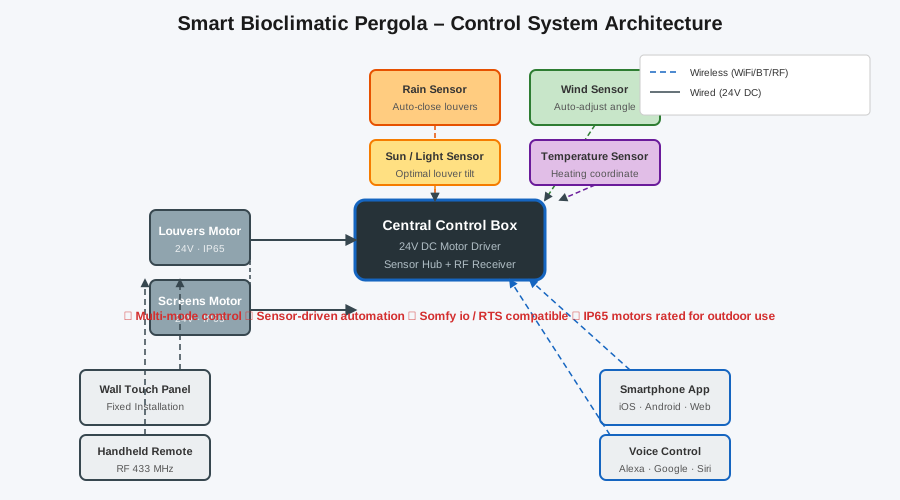
Modern bioclimatic pergolas integrate multiple environmental sensors to automate louver positioning:
- Rain sensors: Automatically close louvers when precipitation is detected, protecting furniture and occupants. The sensor activation threshold can typically be calibrated to avoid false triggers from humidity or condensation.
- Wind sensors: Retract side screens and adjust louver angles to safe positions when wind speeds exceed programmable thresholds, preventing structural damage from gust loads before they reach design limits.
- Sun/light sensors: Adjust louver angles to maintain desired light levels and solar heat gain, optimizing thermal comfort without manual intervention.
- Temperature sensors: Coordinate with heating and cooling systems to maintain target comfort conditions.
Automated environmental response through sensor integration represents the functional state of the art, enhancing user convenience while protecting the structure from extreme weather conditions.
4.2 Control Ecosystems
Leading systems offer multi-modal control options:
- Smartphone apps: Full control interface accessible from anywhere with internet connectivity, enabling remote adjustment of louver position, lighting scenes, and heating settings.
- Voice control: Integration with Amazon Alexa, Google Home, and Apple HomeKit for hands-free operation.
- Wall-mounted touch panels: Dedicated physical interfaces for fixed installations, preferred in commercial settings where staff access is required.
- Handheld remotes: Simplified control for end-users who prefer tactile interfaces without app dependency.
4.3 Motor Specifications
Motor quality directly impacts system reliability and service life. Premium bioclimatic pergolas utilize 24V low-voltage DC motors for operational safety and smooth, quiet movement-. Key motor specifications to verify include:
- IP rating: IP65 or higher for outdoor exposure, ensuring protection against dust ingress and water jets from any direction.
- Duty cycle: Continuous or high-cycle rating appropriate for commercial applications where louvers may be adjusted multiple times daily.
- Synchronization: Multi-motor systems requiring precise synchronization across drive shafts to prevent louver binding and ensure uniform operation across the roof span.
- Manual override: Mechanical manual operation capability for emergency situations or power outages.
Somfy io-homecontrol and RTS (Radio Technology Somfy) protocols are widely adopted in premium European systems, providing robust RF communication with encryption and frequency-hopping for interference resistance.
5. Maximizing Commercial ROI
For restaurants, hotels, and country clubs, a bioclimatic pergola is not a cost center—it is a revenue-generating asset with measurable, often rapid, return on investment.
5.1 The Revenue Math
Consider a restaurant with a 50-seat outdoor terrace. Without weather protection, those tables become unavailable during rain, extreme heat, or unseasonable cold. If weather conditions render the terrace unusable two days per week during peak season, and the average revenue per table is 15000.
By installing a bioclimatic system with optional infrared heating panels and motorized side screens, the operator converts those lost days into revenue-generating days. The capital cost of the structure is typically recoverable within the first full season of unrestricted operation. Mechanical, weatherproofed square footage commands substantially higher effective lease rates than exposed rooftop or patio space—a metric that property developers increasingly factor into project pro forma calculations.
5.2 Beyond Weather Protection
The ROI extends beyond rain protection. A well-designed bioclimatic pergola:
- Extends peak operating hours: Heated and enclosed configurations enable dining service earlier in spring and later into autumn, adding weeks to the revenue calendar.
- Enables premium programming: Weather-independent event hosting—wedding receptions, corporate gatherings, private parties—commands premium pricing without weather-cancellation risk.
- Enhances property valuation: Permanent, engineered outdoor structures contribute to property appraisals, unlike temporary shade solutions that add negligible assessed value.
- Reduces energy costs: Passive solar control through adjustable louvers reduces cooling loads on adjacent indoor spaces, contributing to building energy performance targets.
Properties with bioclimatic pergolas fall within the growing category of climate-responsive architecture, a sector tracked by both real estate analysts and sustainability certification programs. As green building standards increasingly reward outdoor environmental control strategies, the value proposition extends beyond immediate operational returns to longer-term asset positioning.
6. Sourcing from a Direct Manufacturer: The Oudeoutdoor Advantage
As global demand for bioclimatic pergolas accelerates, B2B buyers must partner with suppliers who can deliver consistent quality at scale. Relying on middlemen or trading companies often leads to compromised engineering oversight, limited customization flexibility, and supply chain opacity.
6.1 Vertically Integrated Manufacturing
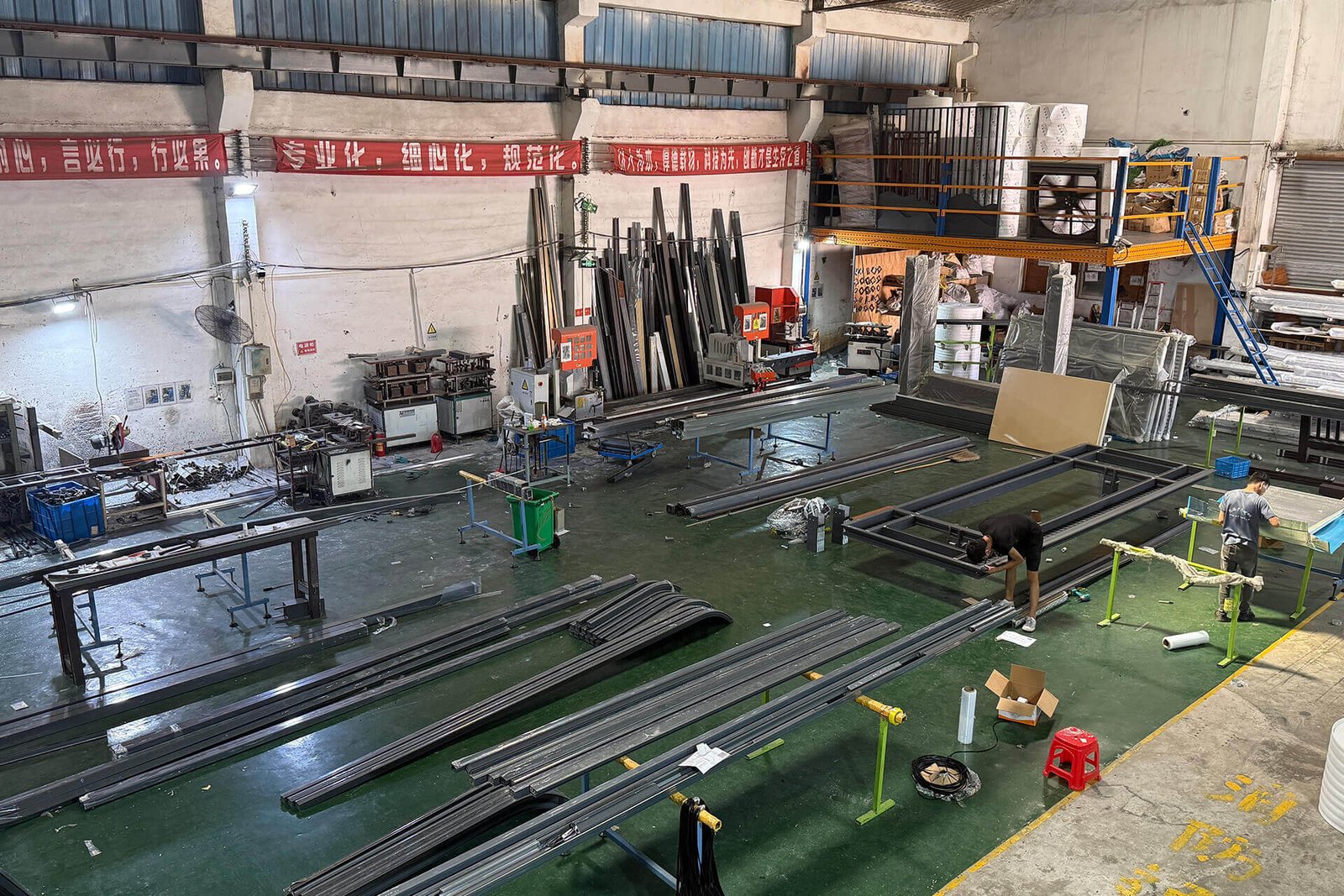
Oudeoutdoor operates a 15,000-square-meter state-of-the-art manufacturing facility in Foshan City, Guangdong—the heart of China’s aluminum industrial ecosystem. Foshan’s unparalleled concentration of raw material suppliers, extrusion specialists, surface treatment facilities, and logistics networks provides a structural cost advantage that distributors benefit from directly.
Guangdong Province hosts one of the world’s most mature aluminum extrusion industries, where vertically integrated factories combine R&D, raw material processing, CNC machining, powder coating, and final assembly within close geographic proximity. This integration reduces logistics costs and accelerates production timelines compared to fragmented supply chains.
6.2 Automated Production Equipment
Our recently upgraded automated production lines include:
- CNC automatic cutting machines: Programmable precision cutting of aluminum profiles with tolerances measured in tenths of a millimeter, ensuring consistent fit across all structural joints.
- CNC press brakes and bending centers: Automated bending of beams, brackets, and connection plates with repeatable angular accuracy.
- Automated folding and punching lines: High-speed production of uniform channels, flanges, and connector components at volume.
6.3 OEM and ODM Services
We offer flexible engagement models to match your business requirements:
OEM (Original Equipment Manufacturing): Supply your technical drawings, 3D models, or sample specifications. We manufacture precisely to your requirements—custom dimensions, proprietary connection systems, branded packaging, and regional compliance certifications.
ODM (Original Design Manufacturing): Leverage our catalog of proven bioclimatic pergola, carport, and gazebo designs as your starting point. Our engineering team customizes any model with your preferred roofline style, louver configurations, post dimensions, finish specifications, and smart control integrations.
6.4 Quality Assurance
Quality at Oudeoutdoor is systematic, not reactive. In-process inspections occur at every critical stage:
- Incoming aluminum profile verification against mill certificates and alloy specifications
- First-piece dimensional approval after CNC cutting
- In-line dimensional checks after bending and folding
- Powder coating thickness and adhesion testing per AAMA standards
- Final assembly verification and packaging inspection before dispatch
We welcome third-party inspection agencies including SGS and Bureau Veritas at any production stage.
6.5 Export-Grade Packaging and Logistics
Oudeoutdoor’s Foshan location provides efficient access to world-class container ports including Nansha and Yantian. All structures are disassembled into flat-pack kits for container optimization, with profiles individually wrapped in protective film and packed into reinforced cartons or fumigated plywood crates per destination requirements. Professionally illustrated assembly manuals support our clients’ installation teams and end-user customers.
7. Conclusion
The motorized bioclimatic aluminum pergola is no longer a niche luxury item—it is the new standard in modern outdoor architecture. The global market, projected to surpass USD 1.1 billion by 2034, reflects a structural shift in how outdoor spaces are valued, engineered, and commercialized.
For B2B distributors, contractors, and architectural specifiers, 2026 represents a critical window to establish supplier relationships that can scale with growing demand. Businesses that offer engineered, code-compliant, sensor-integrated outdoor structures will secure a significant competitive advantage as building codes tighten, customer expectations rise, and the distinction between indoor and outdoor space continues to dissolve.
At Oudeoutdoor, we combine 15,000 square meters of automated production capacity, over 100 skilled production specialists, and a singular focus on aluminum outdoor structures to serve as your manufacturing partner.
Are you ready to elevate your product catalog with industry-leading aluminum structures? Contact Oudeoutdoor‘s engineering team today to discuss wholesale distribution, custom CAD designs, factory-direct pricing, and structural compliance for your target markets.