
Introduction: Lead Time Is the Silent Dealbreaker in Outdoor Structure Sourcing
In B2B sourcing, price gets the first question and lead time gets the last word. A distributor can absorb a slightly higher unit cost — but a missed delivery date means a missed construction season, an unhappy contractor, and a client who won’t reorder. For aluminum pergolas, carports, and patio covers, lead time isn’t a logistics detail; it’s a competitive weapon.
When we talk to first-time buyers, the same anxiety keeps surfacing: “Your quote is good, but can you actually deliver on time?” It’s a fair question. The outdoor shading industry is full of manufacturers who quote optimistically and deliver late, leaving importers to explain delays they didn’t cause.
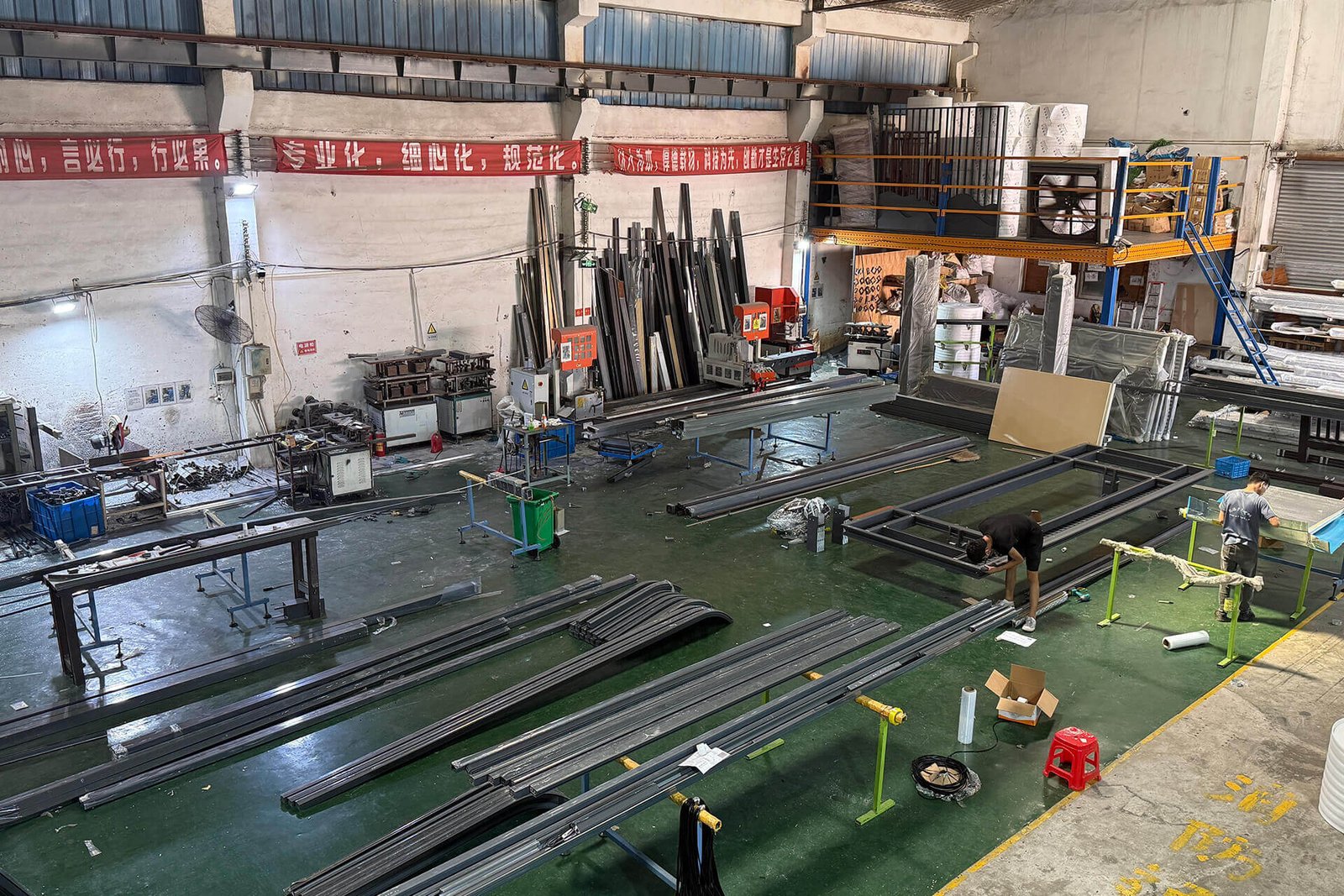
This article pulls back the curtain on how we run our 15,000㎡ automated production facility in Foshan, China, and why our standard OEM lead time lands around 25 days — not as a marketing promise, but as an engineering outcome. If you’re a distributor, contractor, or project buyer evaluating factories, you’ll learn exactly which production capabilities actually compress lead time, and how to tell a genuinely fast factory from one that just says so.
1. Why Lead Time Is So Hard to Get Right (And Why Most Factories Miss It)
Most lead-time failures don’t happen on the factory floor. They happen weeks earlier, in the gap between “order confirmed” and “production actually starts.” Understanding that gap is the key to understanding why some factories deliver in 25 days and others take 60.
1.1 The hidden bottleneck: waiting for materials
A factory that doesn’t control its aluminum extrusion sourcing is at the mercy of its suppliers. If the profile inventory isn’t already on hand — or if the extrusion partner is also serving a dozen other customers — production stalls before the first cut is made. Lead time “promises” quietly become “waiting time” that no one put on the quote.
1.2 The rework tax
When cutting, bending, and assembly are done on outdated or manual equipment, tolerance drift creeps in. Components that don’t fit on the first pass get reworked — and rework compounds across an order, eating days that the schedule never budgeted for.
1.3 The communication lag
OEM projects require engineering drawings, design approvals, and change requests. A factory without a clear approval process lets these bounce around in email for a week at a time. That’s not production time — it’s dead time, and it still lands on your delivery date.
The common thread: fast lead time is a system property, not a sprint. It comes from owning your materials, automating your process, and managing approvals like a process — not an afterthought.
Internal link opportunity: Before you commit to any factory, learn how to verify its real capabilities in our B2B factory audit and quality control guide.
2. Inside the 15,000㎡ Facility: Where the Time Is Actually Saved
Our factory in Foshan — at the heart of China’s aluminum supply chain — is organized around one goal: moving material through production without idle time. Here’s where the lead-time advantage actually comes from.
2.1 The Foshan supply-chain advantage
Foshan is the center of China’s aluminum profile industry, which means our extrusion partners, coating lines, and hardware suppliers are local — not a province away. Raw material that arrives in hours, not weeks, is the first link in a short lead-time chain. It’s a geographic advantage we deliberately built around.
2.2 Automation that removes variability
Our facility runs CNC precision cutting, bending, and folding lines that hold tolerances the manual alternative can’t match. Why does that matter for lead time? Because a component that’s cut right the first time doesn’t need to be re-cut. Automation doesn’t just speed up individual operations — it eliminates the rework loop that silently destroys schedules.
2.3 A process built for repeatability
From aluminum extrusion to powder coating, assembly, and final testing, we control the full production chain in-house. Controlling every step means we can sequence orders precisely, batch efficiently, and — most importantly — give you a delivery date we can actually hit.
Internal link opportunity: See the facility, production lines, and quality systems in detail in our manufacturing facility upgrade announcement.
3. What “25 Days” Actually Means — and What It Doesn’t
Let’s be precise, because vague lead-time language is how buyers get burned.
3.1 What 25 days covers
Our standard lead time of roughly 25 days refers to production for a confirmed, standard-configuration order — from material arrangement through cutting, assembly, testing, and packaging. It assumes drawings are approved and no unusual custom engineering is required.
3.2 What changes the number
Lead time moves for legitimate reasons, and a trustworthy factory will tell you which variables apply to your order:
- Custom engineering — fully bespoke structures with new tooling or unusual dimensions add design time.
- Surface finishes — premium coatings or special colors add coating-line days.
- Order volume — a full container of 500 units schedules differently than a 20-unit trial order.
- Peak season — spring is the industry’s busiest window; capacity fills early.
The point isn’t that 25 days is universal. The point is that a real factory gives you a number plus the variables that move it — not a single optimistic figure that quietly stretches after you’ve paid the deposit.
3.3 How to pressure-test a lead-time claim
Ask three questions and watch how confidently they’re answered:
- “Walk me through what happens between order confirmation and the first cut.”
- “What specifically would push this order past the quoted date?”
- “How do you handle it when a change request arrives mid-production?”
A factory that answers these concretely is one that manages time as an engineering discipline — not a guess.
Internal link opportunity: If your project involves custom dimensions or specifications, understand the full journey in our custom aluminum structures planning guide.
4. From Order to Ocean: How We Keep the Clock Running After Production
Fast production means nothing if the goods stall in a warehouse. Here’s how we protect the schedule on both sides of the manufacturing floor.
4.1 Export-grade packaging, done right the first time
A pergola that arrives damaged is a delivery failure, no matter when the ship left. We use reinforced, heavy-duty wooden crate packaging engineered for ocean freight — a detail we’ve refined across projects shipping to Morocco, Australia, Saudi Arabia, and beyond. Packaging that survives transit means no re-shipment, no replacement lead time, and no client dispute on arrival.
4.2 Logistics flexibility for every order size
Whether you’re importing a full container (FCL) or a smaller consolidated load (LCL), we match the shipping method to your volume and destination. Efficient logistics partnerships keep the post-production window as tight as the production window itself.
Internal link opportunity: See how our packaging held up on a real international delivery in our Morocco boutique hotel case study and other customer stories.
5. Why a Fast Factory Is a Safer Bet for Distributors and Contractors
Lead time isn’t just about speed — it’s about risk. Here’s what a short, reliable lead time buys you beyond the calendar.
Faster cash conversion. The sooner your order ships, the sooner your stock turns into revenue. A 25-day lead time means you can reorder before you run out, instead of forecasting six months of demand.
Seasonal flexibility. Outdoor structures are a spring-and-summer business in most markets. A factory that can turn orders quickly lets you chase demand spikes instead of pre-buying months ahead and guessing wrong.
A stronger relationship. Reliable delivery builds trust with your customers. When your contractor knows you deliver on schedule, they reorder — and that predictability is worth more than a marginal price discount.
Lower total cost. Rushed production, rework, and air-freight emergencies are expensive. A factory that hits its dates on regular production rarely needs to charge you for the cost of its own chaos.
Internal link opportunity: Ready to compare your sourcing options across structure types? Start with our aluminum outdoor structures comparison guide.
6. Conclusion: Partner with a Factory That Treats Time as an Engineering Spec
Lead time is where a manufacturer’s promises meet reality. A factory that owns its materials, automates its production, and manages approvals like a process can deliver in 25 days — not because it cuts corners, but because it has engineered the waiting out of the system.
At Oudeoutdoor, we’ve built our 15,000㎡ Foshan facility around that principle: full OEM/ODM capability, CNC-automated lines, in-house control from extrusion to packaging, and a lead time we’re willing to put a number on. For distributors, contractors, and project buyers worldwide, that’s the difference between a supplier who hopes to deliver — and one who does.
Planning your next order? Send us your project specifications and target timeline, and our team will confirm a production schedule and quote within 24 hours.