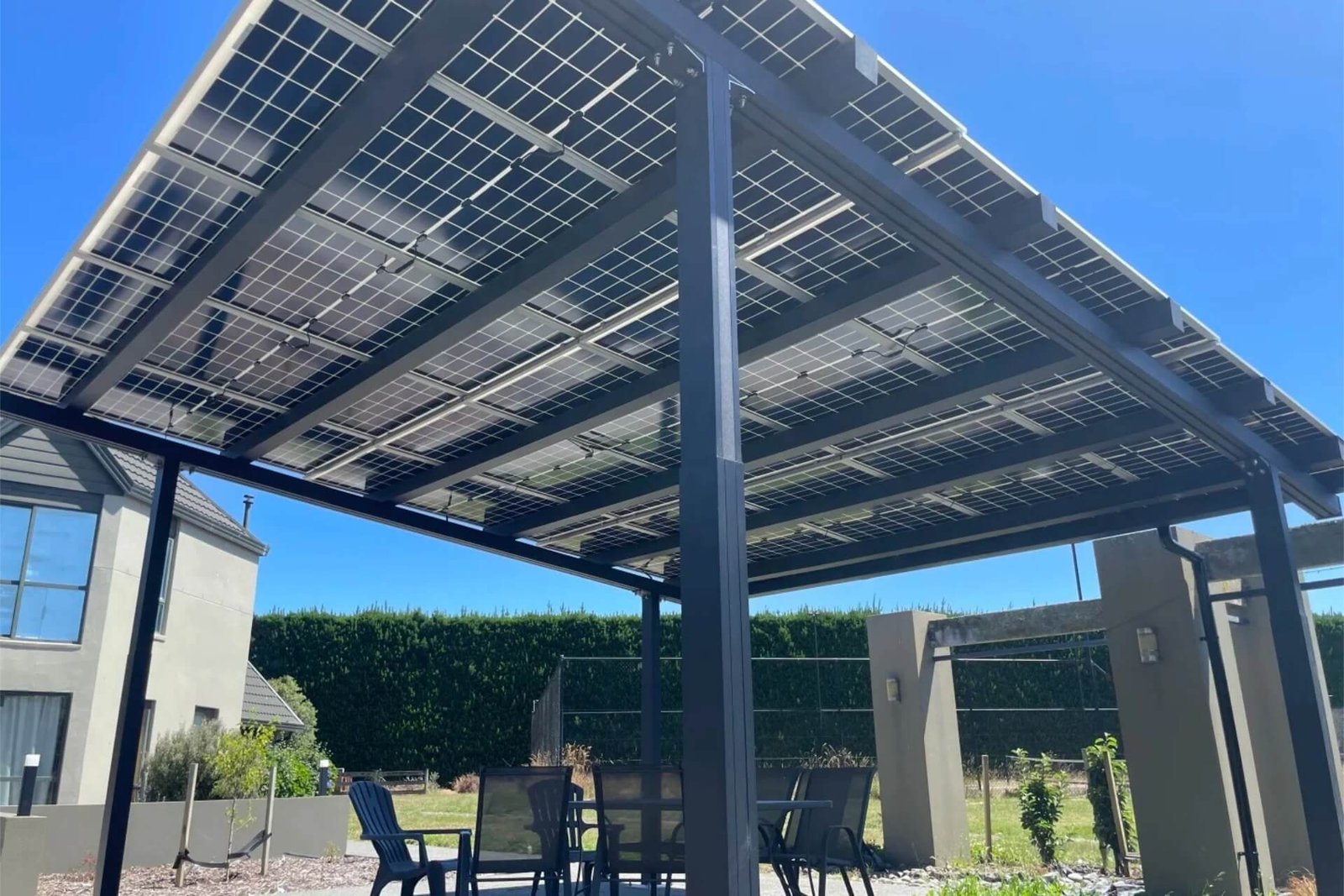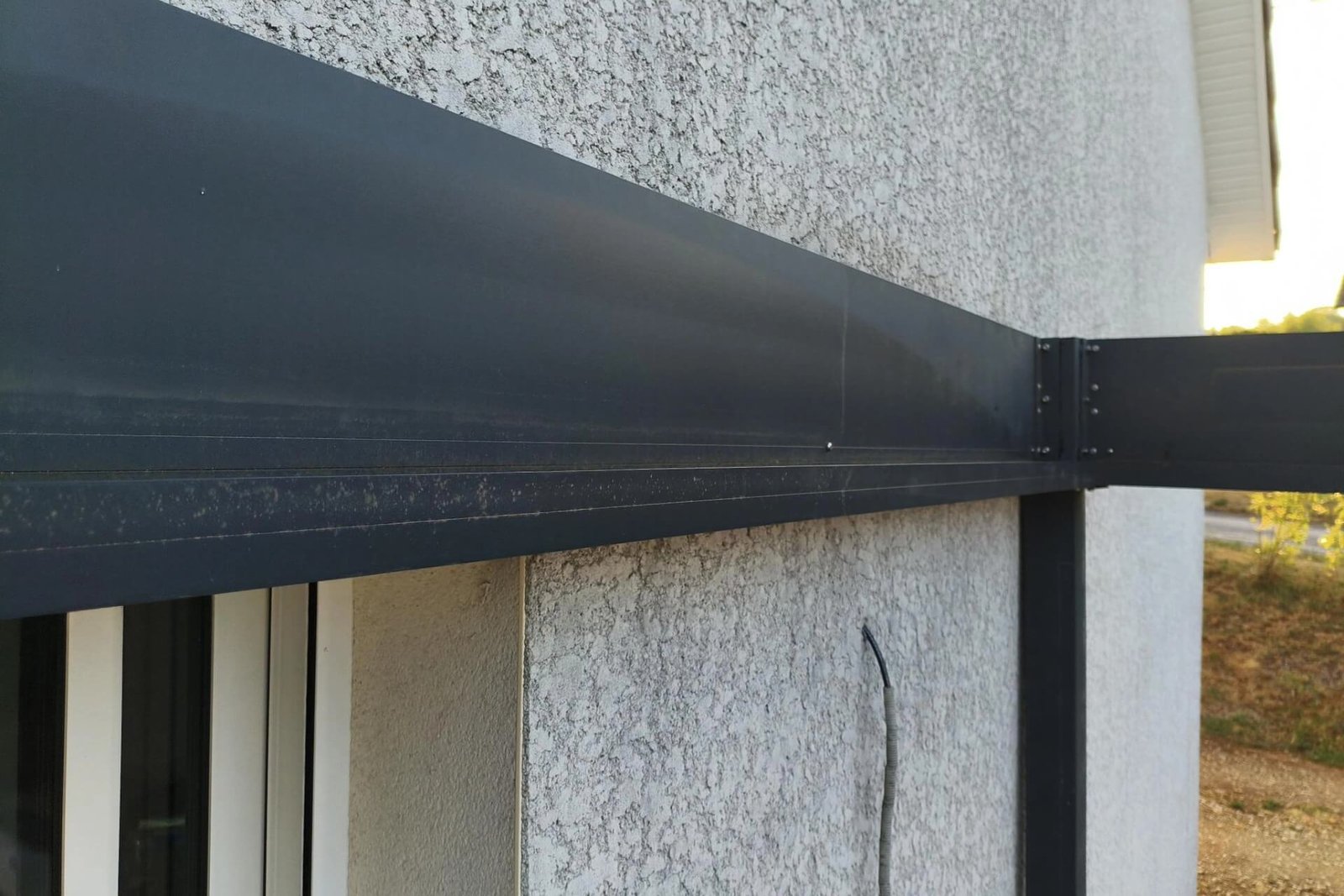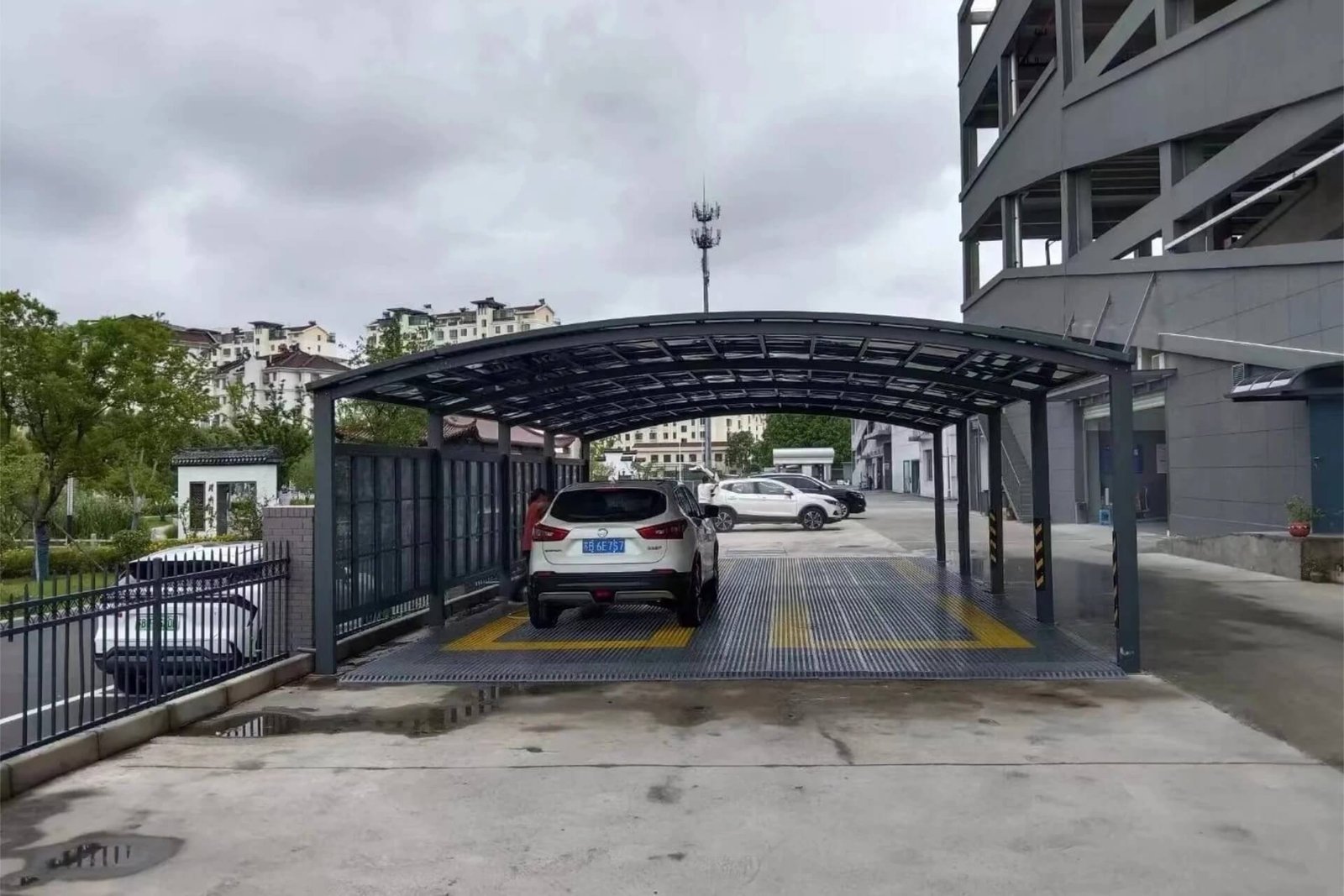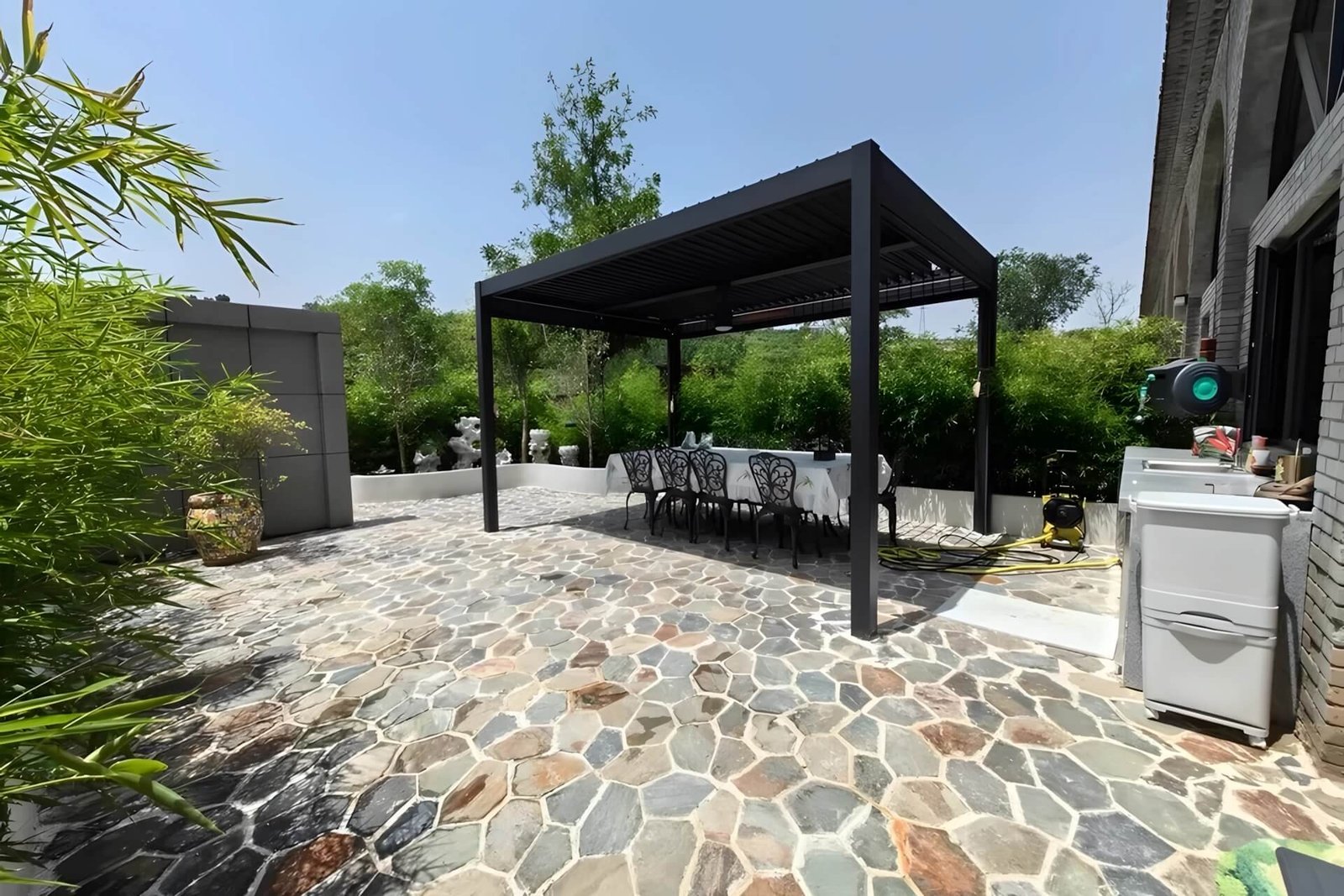
You know you need an outdoor structure. What you’re less sure about is which one. A pergola? A carport? A canopy? A patio cover? The terminology gets thrown around interchangeably, but they serve different functions, carry different engineering requirements, and deliver different returns on investment.
This guide breaks down each option in plain language, with commercial decision-makers in mind. Whether you’re outfitting a restaurant terrace, protecting a hotel entrance, covering a fleet parking area, or extending usable space behind a retail store, the right choice starts with understanding what each structure is built to do.
We’ll also point you to deeper resources where relevant. And if you’re still unsure after reading, our engineering team can help you evaluate your specific site conditions and goals.
1. Start with Function, Not Terminology
Before comparing products, define what you need the structure to accomplish. The answers to these questions will quickly narrow your options:
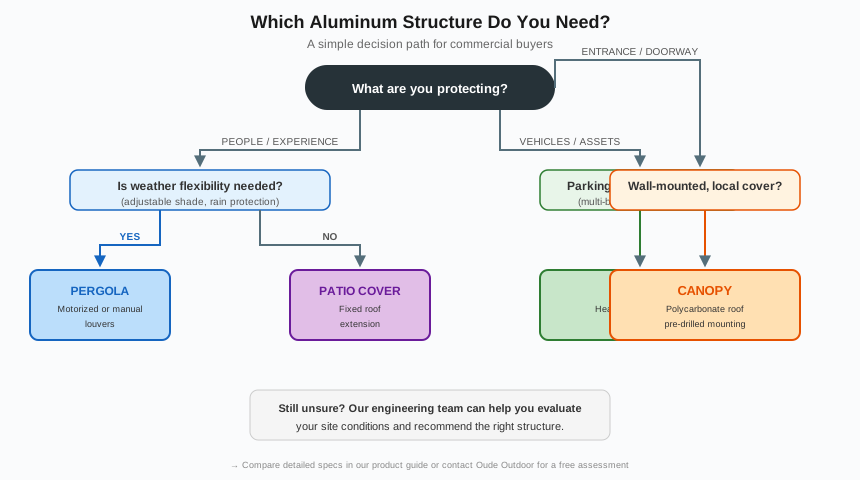
- What are you protecting? People, vehicles, or both? A dining terrace needs a very different structure than a parking area.
- How much flexibility do you need? Do you want to control sunlight and ventilation dynamically, or is a fixed roof sufficient?
- What’s the site condition? Rooftop? Ground-level? Attached to a wall or freestanding?
- What’s the weather exposure? High wind? Heavy snow? Coastal salt?
- What’s the budget and timeline? Custom motorized systems cost more and take longer than fixed canopies.
Once you have clarity on these, the product comparison becomes straightforward.
2. Aluminum Pergolas: The Premium Architectural Statement
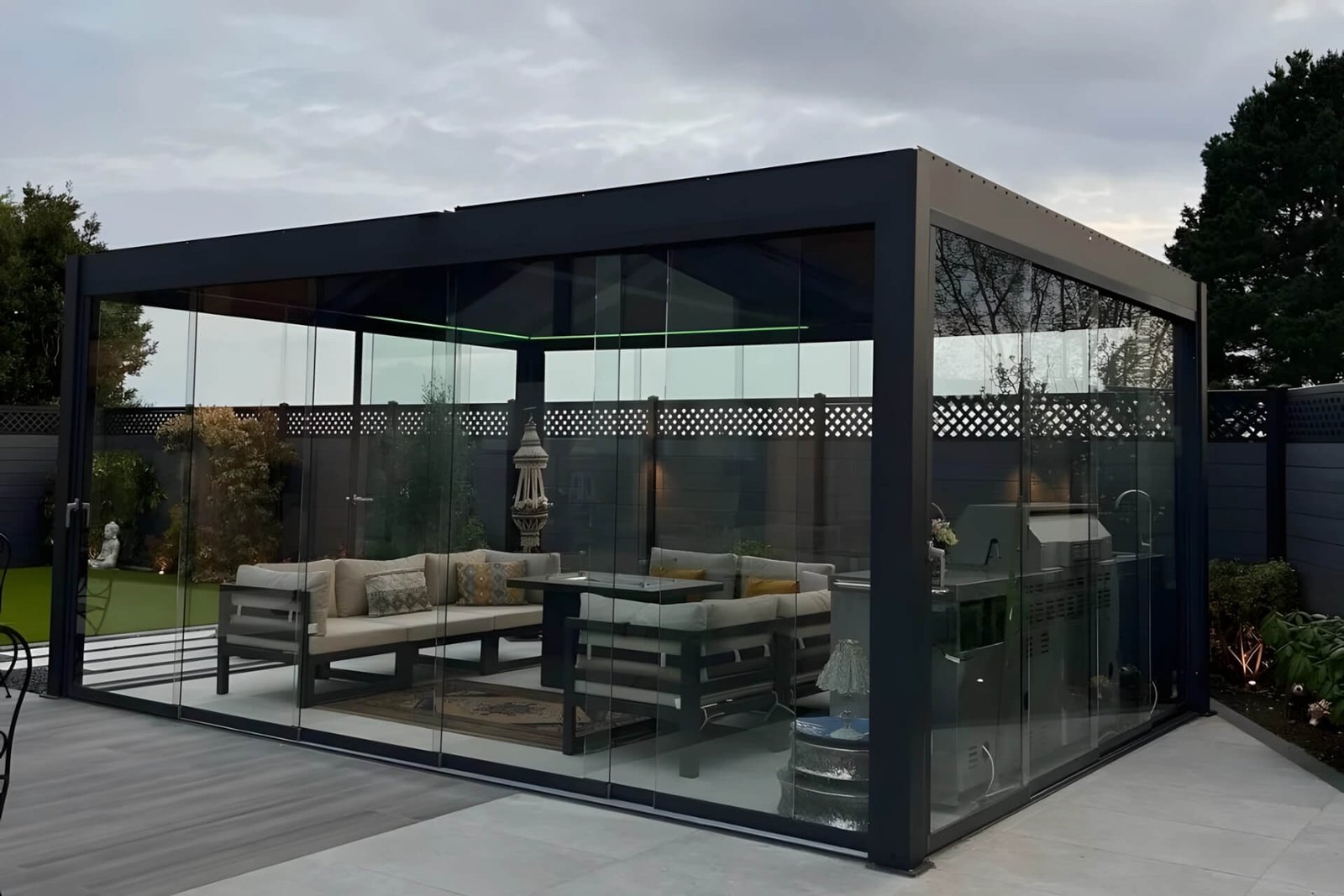
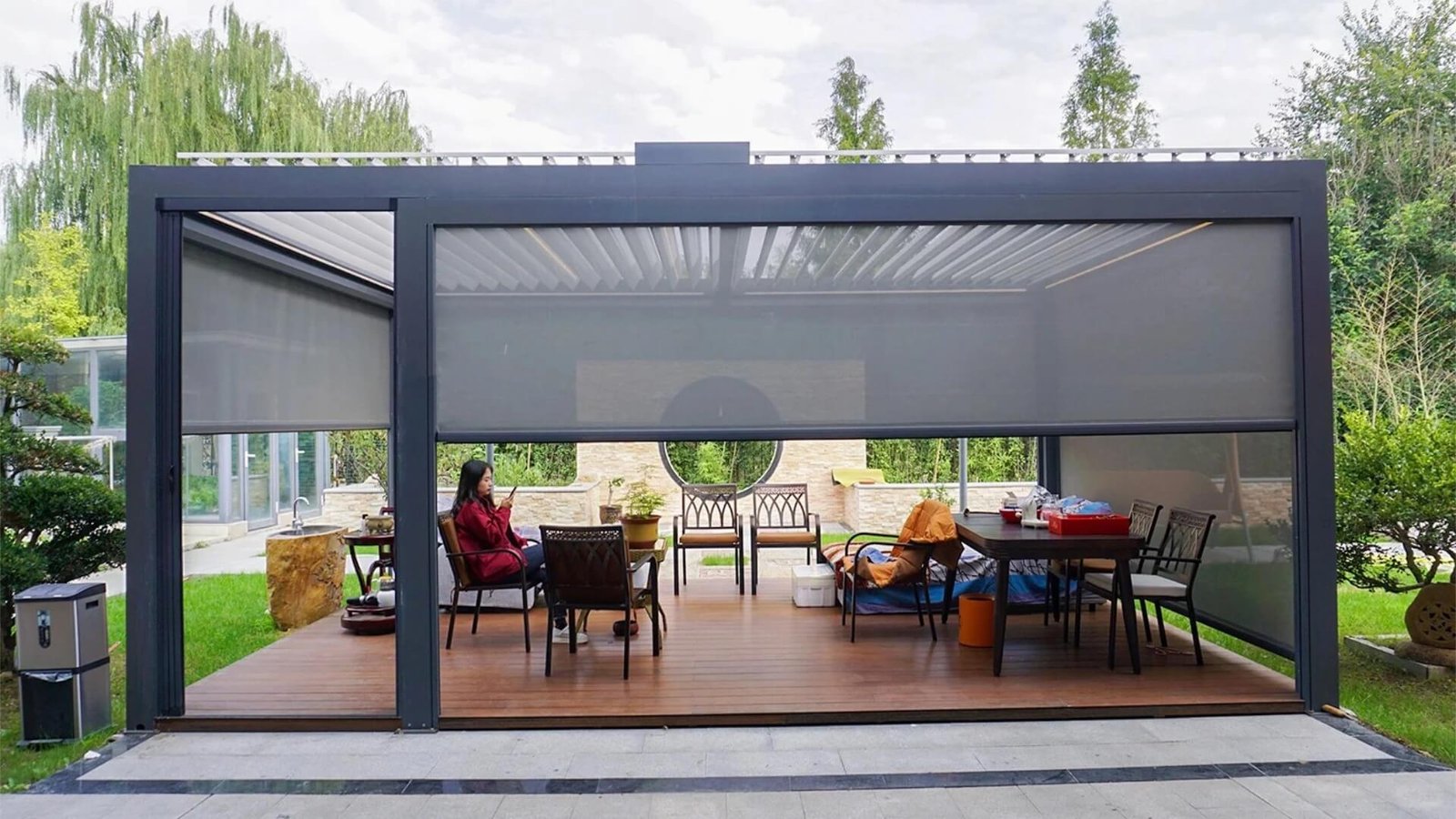
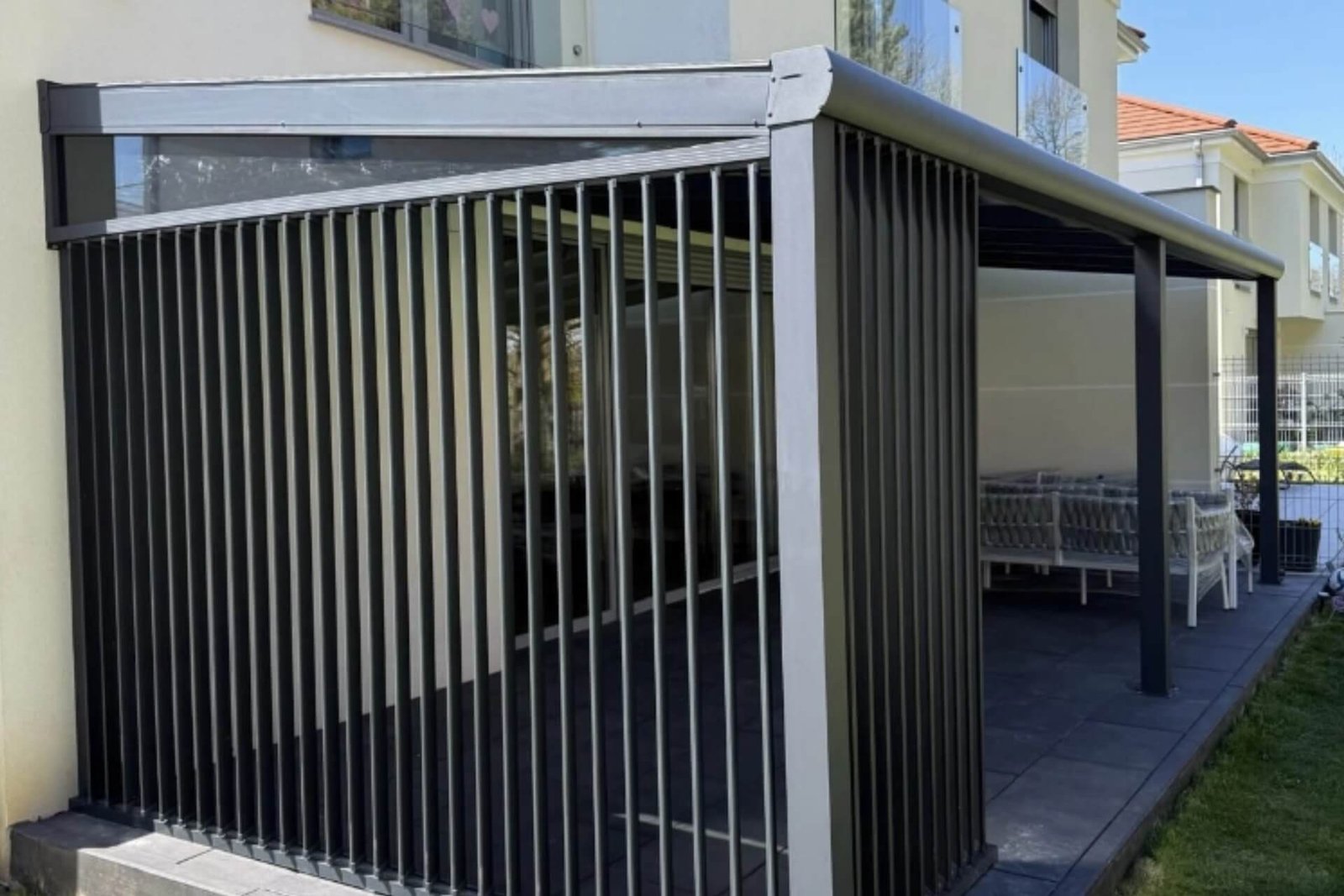
A pergola is an open-framed structure, typically freestanding or wall-mounted, with a roof composed of beams, rafters, or adjustable louvers. In commercial settings, pergolas are the go-to choice for creating defined outdoor rooms—dining terraces, lounge areas, poolside cabanas, and event spaces.
2.1 Motorized Louvered Pergolas
Motorized louvered pergolas are the flagship product in the bioclimatic category. Their adjustable aluminum louvers rotate from open to closed, providing on-demand shade, ventilation, and rain protection. When closed, the interlocking louvers form a watertight roof with concealed drainage.
We’ve written extensively about why these systems are dominating the market in Why Bioclimatic Pergolas are Dominating the 2026 Outdoor Architecture Market. For commercial buyers, the key advantage is revenue protection: a restaurant terrace that stays open during rain or extreme heat generates income that a fixed roof cannot guarantee.
- Best for: Restaurants, hotel terraces, rooftop bars, resort pool decks, high-end residential.
- Product link: Motorized Louvered Pergola
2.2 Manual Louvered Pergolas
Manual louvered pergolas offer the same adjustable functionality without the motor and smart controls. Louvers are adjusted by hand crank or pole. They cost less than motorized systems and require no electrical wiring, making them a practical choice for projects with tight budgets or limited power access.
- Best for: Smaller patios, cafes with modest outdoor space, projects where automation isn’t required.
- Product link: Manual Louvered Pergola
2.3 Wall-Mounted Louvered Pergolas
Wall-mounted designs attach to an existing building facade, using the structure for support on one side. This reduces the number of posts and creates a seamless indoor-outdoor transition. They’re popular for restaurant storefronts, hotel entrances, and residential additions where a freestanding structure would obstruct flow.
- Best for: Storefront dining, entryways, narrow side yards.
- Product link: Wall-Mounted Louvered Pergola
If you’re comparing pergolas against traditional wood structures, our Aluminum vs. Wood Pergolas ROI guide lays out the financial case in detail.
3. Aluminum Carports: Protecting Vehicles and Assets
A carport is a freestanding or attached structure designed primarily to shelter vehicles. Unlike a pergola, which is optimized for human comfort and aesthetics, a carport prioritizes clear spans, durable roofing, and protection from sun, hail, snow, and tree debris.
Commercial carports are used at hotels, office parks, shopping centers, automotive dealerships, and fleet yards. They’re often larger in scale than pergolas, with wider post spacing and higher clearances to accommodate multiple vehicles or delivery trucks.
We’ve covered this category in depth in Heavy-Duty Aluminum Carports: The Complete Guide for Commercial Buyers. The article covers engineering loads, customization options, ROI calculations, and real-world applications. If you’re considering a carport, start there.
- Best for: Hotel guest parking, employee parking, fleet vehicle protection, dealership display areas, covered walkways adjacent to parking.
- Product link: Heavy-Duty Aluminum Carports
4. Aluminum Canopies: Targeted Protection for Entrances and Walkways
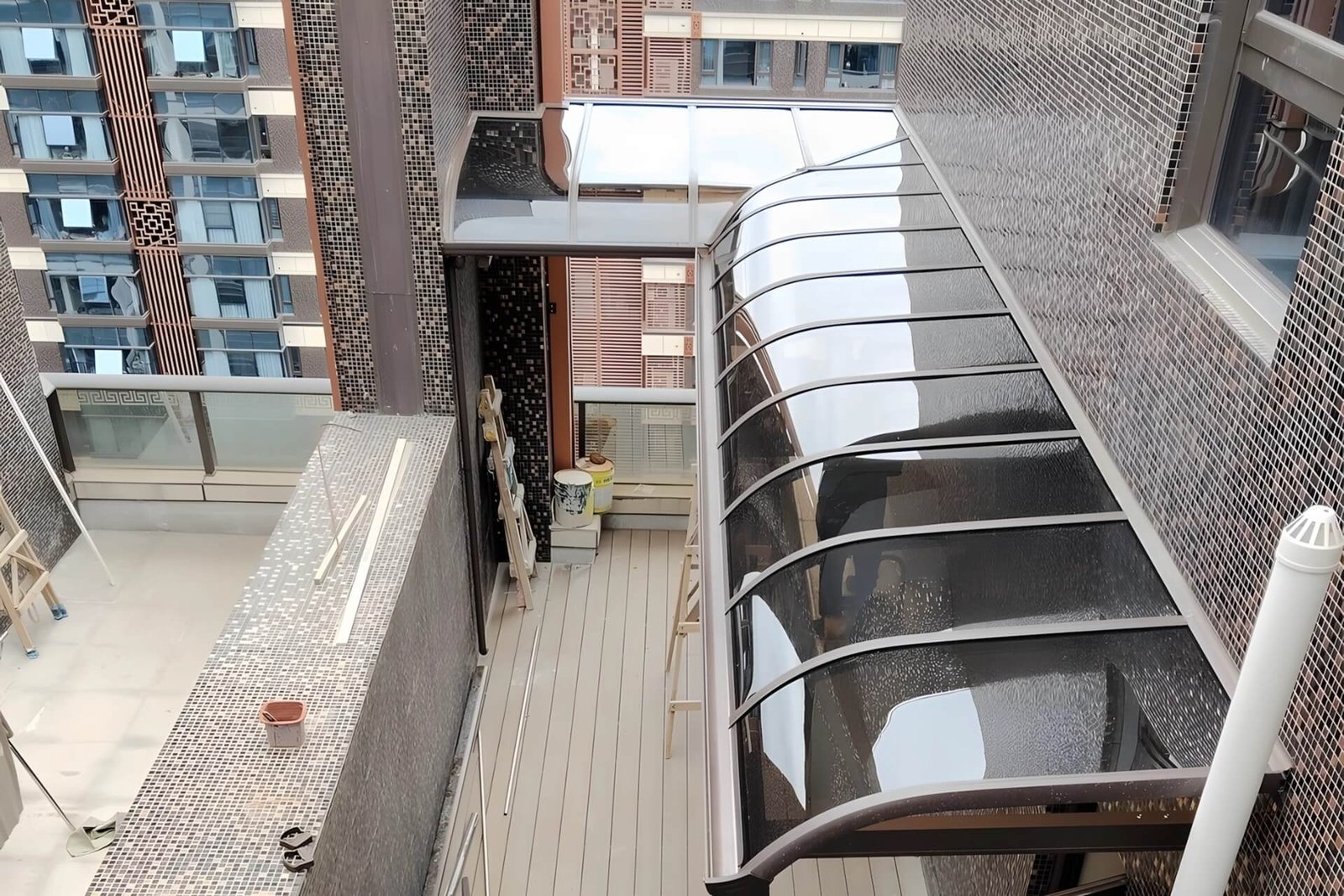
A canopy is a smaller, typically wall-mounted structure that provides localized shade and rain protection over doorways, windows, walkways, or loading zones. Canopies are the workhorses of commercial building entrances—they keep rain off customers, protect merchandise during transfer, and add architectural interest to otherwise plain facades.
Our aluminum canopies are available with polycarbonate roofing for a lightweight, translucent cover that blocks UV while allowing natural light. They can be custom-sized to match your entrance dimensions and powder-coated in your brand color.
- Best for: Hotel front entrances, restaurant doorways, retail storefronts, office building lobbies, window shading.
- Product link: Aluminum Polycarbonate Door & Window Canopy
Canopies are often the entry-level product for commercial buyers who want to test a manufacturer’s quality before committing to larger pergola or carport projects. They’re also the fastest to install—many of our canopy projects are completed in a single day with pre-drilled mounting systems.
5. Aluminum Patio Covers: Extending Usable Space with Simplicity
A patio cover is a fixed-roof structure attached to a building, designed to extend interior living or working space into the outdoors. Unlike a pergola with adjustable louvers, a patio cover has a solid, permanent roof that provides complete shade and rain protection at all times.
Patio covers are often used behind restaurants for employee break areas, at cafes for semi-enclosed seating, or at office buildings for outdoor meeting spaces. They’re simpler than motorized pergolas and cost less while still delivering reliable weather protection.
Our aluminum patio covers use polycarbonate or insulated panel roofing and can be engineered to match the existing architecture. Because the roof is fixed, snow and wind loads are calculated once, with no moving parts to maintain.
- Best for: Semi-enclosed dining areas, break rooms, outdoor workspaces, residential patios.
- Product link: Aluminum Polycarbonate Patio Covers
6. Side-by-Side Comparison: Which One Fits Your ROI Model?
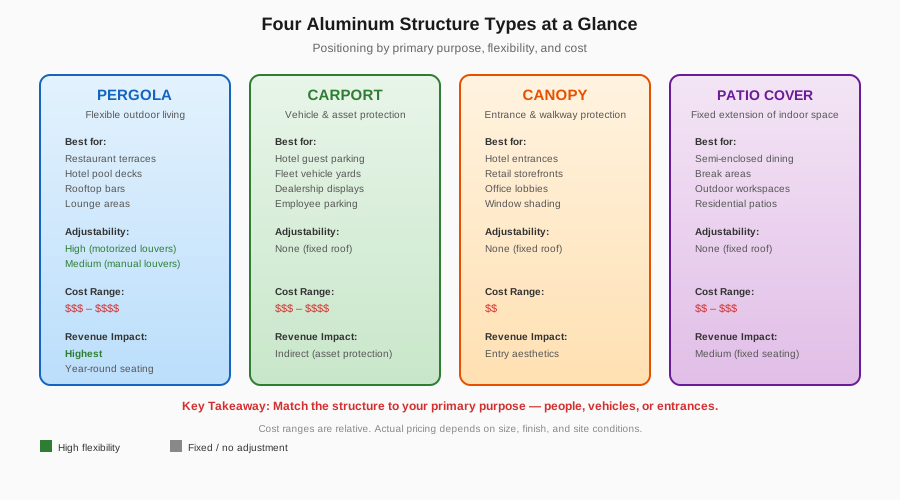
The following table summarizes the key differences across the four product categories. Use it as a quick reference while evaluating your options.
| Criteria | Motorized Pergola | Manual Pergola | Carport | Canopy | Patio Cover |
|---|---|---|---|---|---|
| Primary purpose | Flexible outdoor living | Flexible outdoor living | Vehicle protection | Entrance/walkway protection | Fixed extension of indoor space |
| Adjustability | High (motorized louvers, sensors) | Medium (manual louver adjustment) | None (fixed roof) | None (fixed roof) | None (fixed roof) |
| Typical cost range | $$$$ | $$$ | $$$–$$$$ | $$ | $$–$$$ |
| Installation complexity | High (electrical, automation) | Medium | Medium | Low | Low–Medium |
| Revenue impact for restaurants | Highest (year-round seating) | High (extended season) | N/A (not for seating) | Low (entry aesthetics) | Medium (fixed covered seating) |
| Maintenance | Low | Low | Very low | Very low | Very low |
Cost ranges are relative and depend on size, finish, and site conditions.
7. Engineering and Compliance: The Common Thread
No matter which structure you choose, it must be engineered for the wind and snow loads at your site. A canopy in a coastal Florida hurricane zone faces very different demands than a patio cover in a sheltered inland courtyard.
We’ve published a comprehensive technical guide on this subject: Understanding Wind and Snow Load Engineering for Commercial Aluminum Structures. It covers ASCE 7, EN 1991, and AS/NZS 1170 standards, explains uplift mechanics, and shows how connections are designed to transfer loads safely to the foundation.
For commercial projects, always confirm that your manufacturer can provide structural calculations and, where required, stamped engineering for permit submission. This is not a detail to gloss over—it’s the difference between a structure that passes inspection and one that never gets built.
8. From Decision to Delivery: Sourcing Your Structure
Once you’ve selected the right product type, the process of moving from concept to installation involves design confirmation, sampling, production, and logistics. We’ve outlined the entire journey in The Ultimate Guide to Planning & Sourcing Custom Aluminum Outdoor Structures for Commercial Projects.
That guide covers OEM vs. ODM engagement, customization options, packaging standards, and what to look for in a manufacturing partner. It’s worth reading before you request quotes from any factory.
Speaking of manufacturing partners, Oude Outdoor operates a 15,000-square-meter automated facility in Foshan, China with CNC cutting machines, press brakes, and automated folding lines. We produce aluminum pergolas, carports, canopies, and patio covers for commercial buyers across North America, Europe, Australia, and the Middle East. Our OEM and ODM services allow you to customize dimensions, finishes, and integrated features to match your project requirements.
9. Conclusion: Start with the Problem, Not the Product
The easiest mistake in sourcing outdoor structures is choosing a product before defining the problem. Pergolas are impressive, but they’re overkill if you simply need to keep rain off a delivery entrance. Carports are practical, but they won’t create an inviting dining atmosphere.
Start with your functional needs: What are you protecting? How much flexibility do you require? What’s your budget and timeline? Then use the comparison above to narrow your choices. And when you’re ready to discuss specifics, our team is here to help.
Contact Oudeoutdoor today with your project details—site conditions, dimensions, and goals—and we’ll respond within 24 hours with a feasibility assessment and transparent quotation.