Introduction: The Doorway Is the First Thing Everyone Sees — and the Last Thing Anyone Thinks About
Every visitor to a home, a boutique, or a hotel walks through a doorway. The moment before they enter — reaching for a key, fumbling for a handle, stepping from rain into light — is the single most overlooked opportunity in exterior design. A doorway without a canopy is just an opening. A doorway with a well-chosen canopy is an arrival: sheltered, lit, and deliberately welcoming.
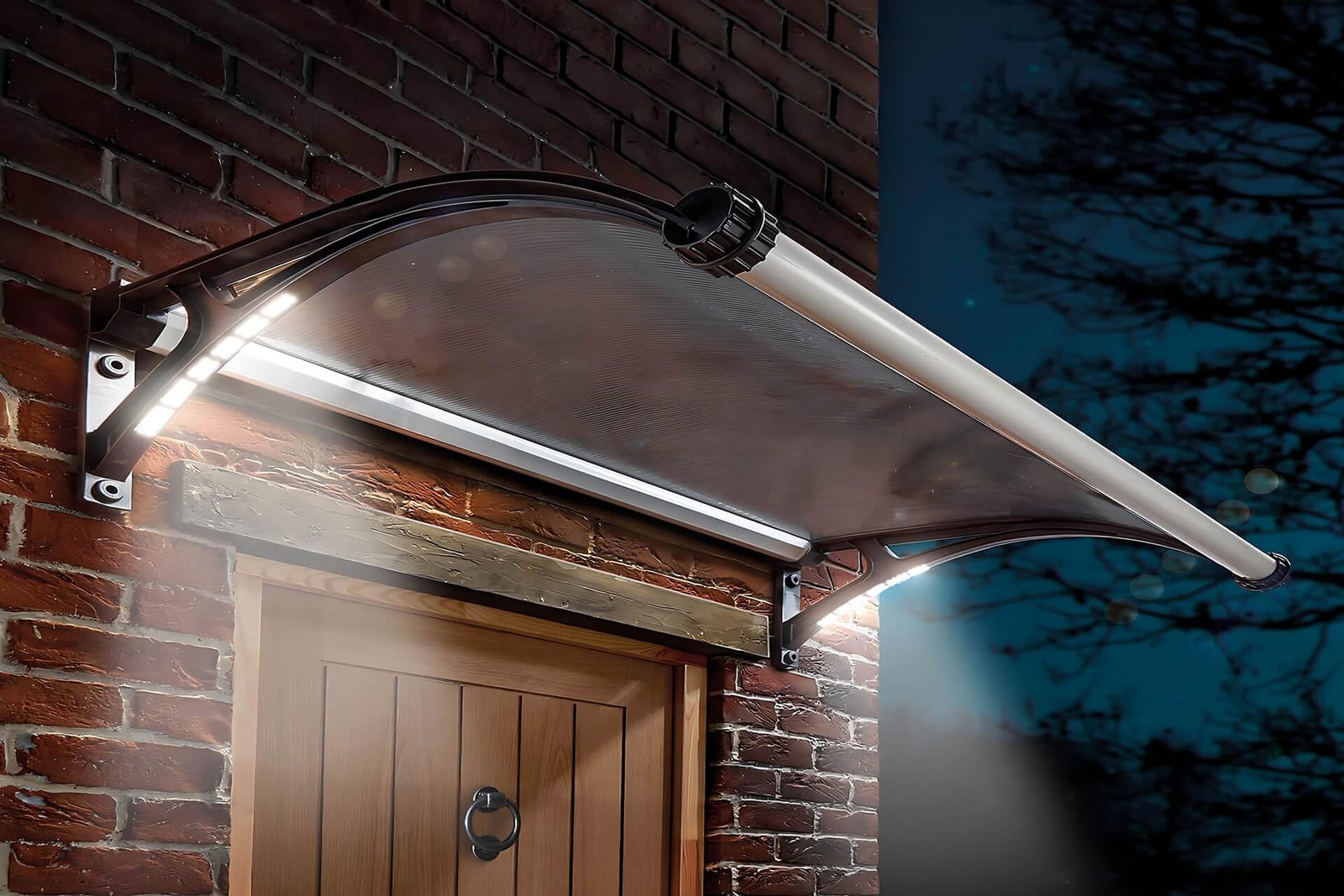
For decades, the door and window canopy (also called an awning or entrance canopy) has been a purely passive structure — a slab of polycarbonate or fabric that blocks rain and sun, and nothing more. That’s changing. The newest generation of canopies does what no awning could before: it sees you coming, and switches on the light before you reach the door.
This guide is about the motion sensor LED canopy — a smart door and window awning that combines weather protection with automatic, motion-activated illumination. It’s written for homeowners, architects, contractors, and B2B buyers who want to understand what these structures are, how the technology works, what to look for in the specifications, and how to source them for a residential, commercial, or hospitality project.
By the end, you’ll know exactly how to specify a canopy that protects your entryway, lights your arrival, and — as we’ll show through a real luxury-villa project in Jordan — scales elegantly across even the widest windows.
1. What Is a Door and Window Canopy? (And Why It Matters More Than You Think)
Let’s start with definitions, because the terminology around canopies is genuinely confusing — and getting it right matters when you’re comparing products.
1.1 Canopy vs. awning vs. porch cover
- A canopy is a permanent, wall-mounted structure that projects over a door or window, supported by brackets or arms.
- An awning is technically a fabric or retractable cover; in common usage, the two terms are often used interchangeably for fixed window and door covers.
- A porch cover or patio cover is a larger structure that extends over a full entry area or outdoor space.
For our purposes, a door canopy or window canopy is the fixed, bracket-supported structure that shelters an individual doorway or window. It’s the smallest, most cost-effective way to add both protection and architectural character to an entrance.
1.2 What a good canopy actually does
A canopy earns its place through three concrete jobs:
- Weather protection — shielding the door, the window frame, and the person standing beneath it from rain, snow, and direct sun.
- Architectural framing — visually anchoring the entrance and elevating the facade’s appearance.
- Lighting the arrival — and this is where the modern canopy has leapfrogged its predecessors.
It’s the third job that makes the motion sensor LED canopy a different category of product entirely.
Internal link opportunity: If you’re weighing a canopy against a larger pergola or carport for your project, see how they compare in our aluminum outdoor structures comparison guide.
2. The Motion Sensor LED Canopy: What Makes It Smart
The defining feature of this product is in the name: it’s a canopy that senses movement and responds with light. Here’s how the technology actually works, in plain terms.
2.1 Motion-activated illumination, explained
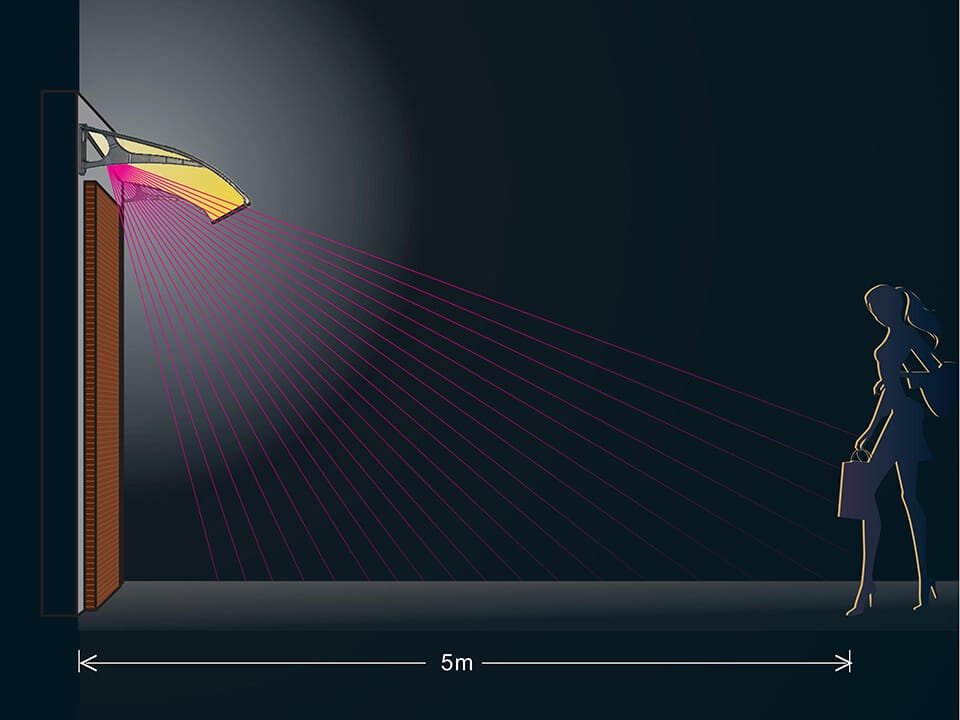
The canopy integrates an LED light source within the panel itself, paired with a motion (PIR) sensor mounted at the canopy’s front edge. When a person — or a vehicle, or a pet — enters the sensor’s detection zone, the light switches on automatically. When movement stops, the light turns off after a preset interval.
The effect is immediate and intuitive: you approach the door, and the entrance lights up to greet you. No switch, no fumbling for an app, no timers to program.
2.2 Key specifications that matter
When evaluating a motion sensor LED canopy, these are the numbers that separate a good product from a gimmick:
| Specification | Typical value | Why it matters |
| Detection range | ~5 meters | Determines how far away the light triggers — you want it to activate before the person reaches the door, not after. |
| Lighting duration | 45 seconds (adjustable) | How long the light stays on after the last movement — long enough to unlock and enter, short enough to avoid wasting energy. |
| Color temperature | 3000K (warm) / 6000K (cool) | Warm light feels residential and welcoming; cool light reads more commercial and modern. |
| Waterproof rating | IP65 | Critical for outdoor electronics — IP65 means protected against rain and dust. |
| Power | 12W / 16W | Low-wattage LED means the light costs pennies to run. |
| Input voltage | AC 220–240V, 50/60Hz | Standard household and commercial mains, globally compatible. |
| Operating temperature | -10°C to 45°C | Covers everything from winter frost to desert heat. |
| Panel material | Optical acrylic | Diffuses light evenly across the whole panel, so the canopy itself glows rather than just spotting light downward. |
2.3 Sizes that fit real doorways
The canopy is available in two standard footprints — 80×120 cm and 100×150 cm — which cover the vast majority of residential doors, shop entrances, and standard windows. This standardized sizing is also what makes the modular system (Section 6) so powerful: standard units can be combined to cover openings far wider than any single panel.
Internal link opportunity: See the full product details and customization options on our aluminum polycarbonate door & window canopy product page.
3. Why Motion-Activated Light Is a Genuine Upgrade (Not a Gimmick)
It’s fair to be skeptical of “smart” features that add cost without adding value. Motion sensor lighting is not one of them. Here’s what it actually delivers.
3.1 Safety and security
A dark entrance is a risk — for the homeowner reaching for a key, for the hotel guest arriving late, for the customer leaving a shop after closing. A light that switches on automatically removes the dark moment entirely. In security terms, sudden illumination is also a proven deterrent: an intruder who triggers a light is an intruder who has been noticed.
3.2 Convenience that compounds daily
The best features are the ones you stop noticing because they simply work. You never think about a motion sensor light — until you visit a home without one and find yourself fumbling in the dark. For a family arriving home with groceries in both arms, an entrance that lights itself is the difference between “nice to have” and “why didn’t we do this sooner.”
3.3 Energy efficiency
Because the light only runs when triggered — and switches off after 45 seconds of stillness — it consumes a fraction of the energy of an always-on porch light. A 12W–16W LED, running only on demand, costs almost nothing to operate while providing light exactly when it’s needed. That’s the rare combination of more functionality and less consumption.
3.4 The aesthetic moment
There’s also an emotional dimension. A canopy that glows softly as you approach — warm 3000K light diffusing through optical acrylic — transforms a utilitarian entrance into a designed experience. For hotels and restaurants especially, this “arrival moment” is part of the brand.
4. Materials and Engineering: Built to Live Outdoors, Year-Round
A canopy is permanently exposed. It faces rain, UV, temperature swings, and — in many markets — coastal salt air. Its longevity comes down to two things: the panel and the bracket.
4.1 Optical acrylic panels
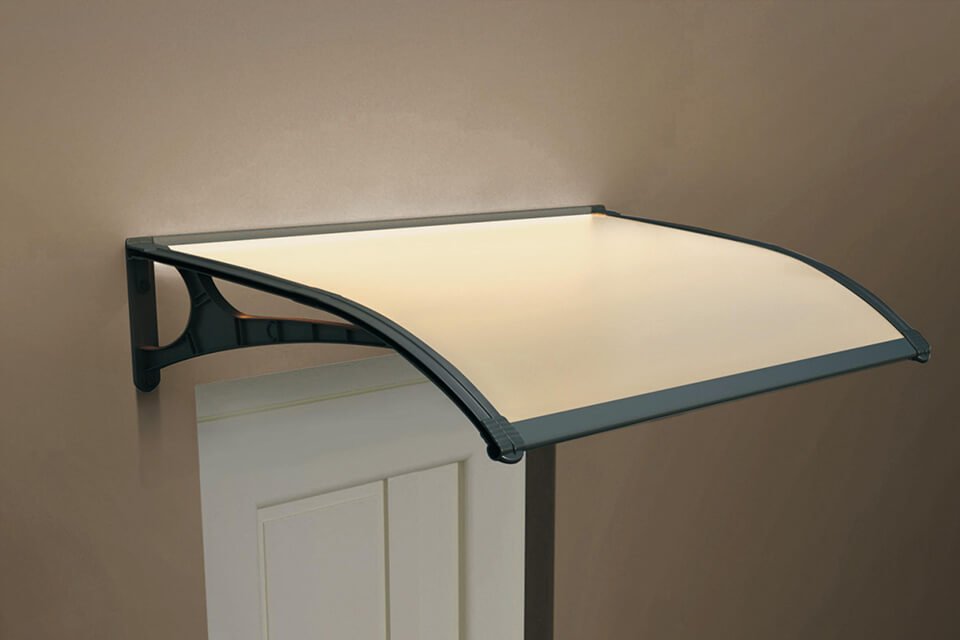
The canopy’s light-diffusing surface is optical acrylic — chosen because it transmits and spreads LED light evenly across the entire panel, creating that soft, uniform glow rather than harsh point sources. Unlike ordinary plastic that yellows and cracks under UV, quality optical acrylic is formulated for long-term outdoor clarity and impact resistance.
4.2 Aluminum alloy brackets
The support arms and wall brackets are aluminum alloy — lightweight, corrosion-resistant, and strong enough to hold the panel securely through wind and weather. Aluminum is the standard choice for exterior structures precisely because it doesn’t rust and requires essentially no maintenance.
4.3 IP65-rated electronics
The motion sensor and LED drivers are sealed to IP65 — protected against dust and against water jets from any direction. This is the minimum rating you should accept for outdoor lighting electronics; anything less is a corrosion and short-circuit risk in the first heavy rain.
Internal link opportunity: If your project is in a coastal or high-humidity environment, the material choices matter even more — see our coastal and beachfront pergola guide for the full corrosion-resistance story.
5. Applications: Where Motion Sensor LED Canopies Deliver the Most Value
This product category spans residential and commercial use, and the value proposition shifts slightly in each context.
5.1 Residential homes and villas
For the homeowner, the canopy is the complete front-door upgrade: shelter from rain, a lit arrival at night, and a modern architectural accent. The warm 3000K option suits residential facades, while the modular system (Section 6) extends the same design language to wide or multiple windows for a cohesive look.
5.2 Retail storefronts and boutiques
For a shop, the entrance is the first impression. A motion sensor canopy lights the storefront automatically as customers approach — welcoming them in, showcasing the entrance after dark, and adding a subtle layer of after-hours security. The 6000K cool option gives a clean, contemporary commercial look.
5.3 Hotels and hospitality
For hotels, the “arrival moment” is brand-critical. A canopy that lights up as a guest approaches the entrance — or as they step out onto a balcony — elevates the perceived quality of the property at almost zero operating cost. It’s the kind of detail guests notice without being able to name it.
5.4 Offices and apartment entrances
For multi-tenant buildings, motion sensor canopies over main and side entrances provide automatic, energy-efficient lighting for residents and employees alike — no timers, no switches, no wasted energy in unoccupied hours.
6. Modular Design: One System That Scales to Any Window
The single biggest pain point in canopy sourcing is non-standard sizes. A wide window, a double door, or a row of commercial windows often can’t be covered by a single off-the-shelf unit — and custom, oversized fabrication is expensive and slow. This is where modular design changes the economics.
6.1 The “infinite modular connection” concept
Instead of building one expensive oversized panel, standard canopy units are engineered to splice seamlessly together. Two, three, or more units connect edge-to-edge to form one continuous, flawless protective surface — matching the exact span of any window or opening.
6.2 A real example: a luxury villa in Jordan
The value of modular design isn’t theoretical; we proved it on a demanding project in Jordan. A multi-story luxury villa featured custom, extra-wide windows that no standard awning could cover — and single-piece oversized canopies from local suppliers were prohibitively expensive.
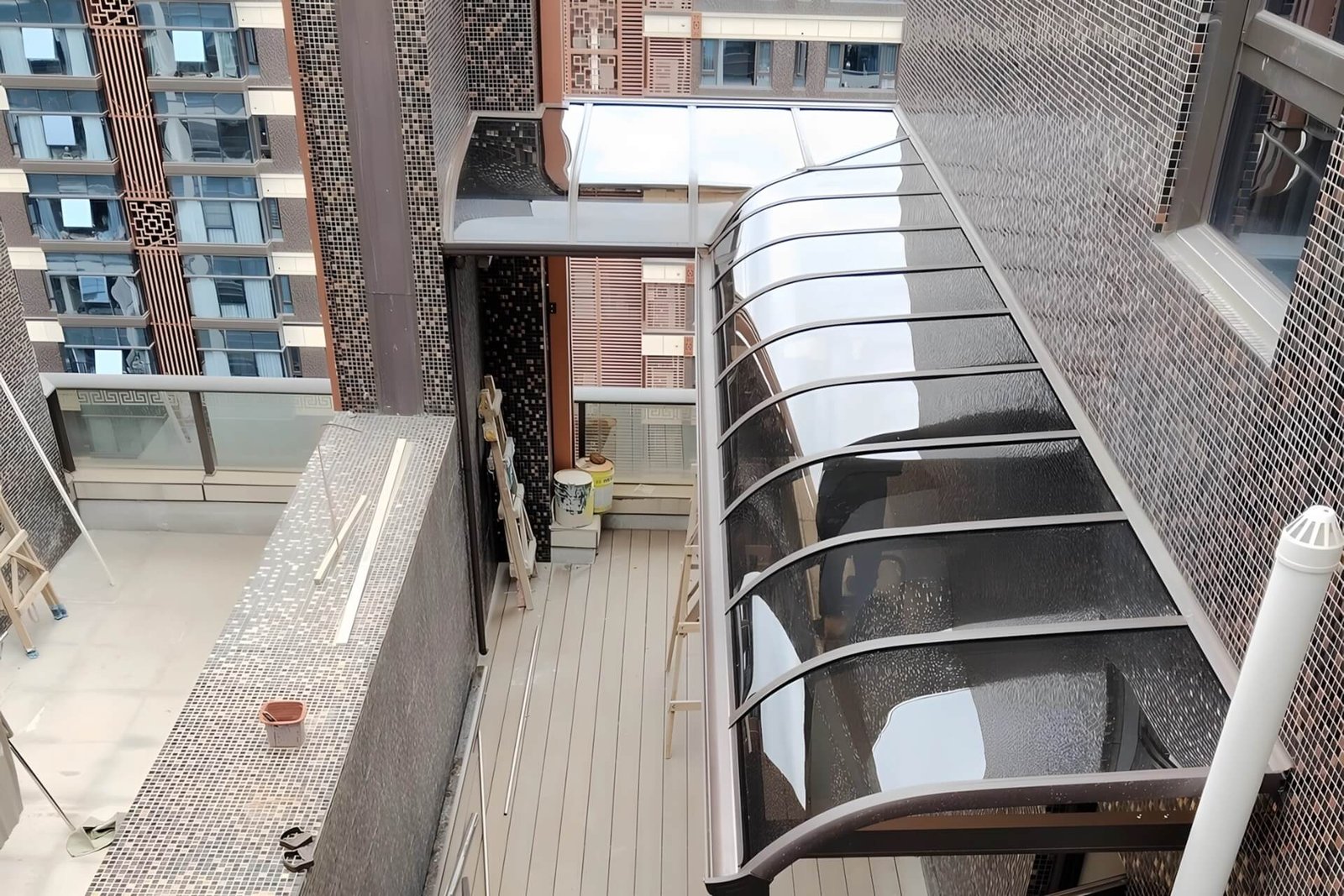
The solution: We supplied our Classic Arched Canopies, which use smart modular connection. For each wide window, the client connected two standard units into a continuous protective arch that precisely matched the window’s span. Because they bought factory-direct, they secured a significant price advantage without sacrificing quality — the canopies feature high-strength brackets and imported shatterproof polycarbonate panels. Our team then provided 1-on-1 remote installation guidance once the cargo arrived in Jordan.
The result: dark-bracketed arched canopies that blend seamlessly with the villa’s modern facade, delivering robust all-weather protection and striking architectural elegance — at a fraction of what custom fabrication would have cost.
Internal link opportunity: Read the full story in our Jordan luxury villa canopy case study, or browse more customer stories.
7. A Buyer’s Checklist: 8 Things to Verify Before Sourcing a Canopy
Whether you’re buying one canopy for a home or a hundred for a commercial project, run this checklist against any supplier’s offering.
- Panel material — Is it optical acrylic or polycarbonate? Confirm UV stability and impact resistance.
- Waterproof rating — The electronics must be IP65 or higher for outdoor use.
- Detection range — Does the sensor trigger at ~5 meters, before a person reaches the door?
- Lighting duration — Is the on-time sensible and (ideally) adjustable?
- Color temperature — Confirm both 3000K and 6000K options, and choose for your facade’s character.
- Bracket material — Aluminum alloy for corrosion resistance and long life.
- Size and modularity — Do standard sizes cover your openings, and can units be spliced for wider spans?
- Installation support — Does the supplier provide clear instructions or remote guidance?
A supplier that can answer all eight with specifics is one you can trust to deliver a canopy that performs for years, not months.
Internal link opportunity: Before you commit to any manufacturer for a larger order, learn how to audit them properly in our B2B factory audit and quality control guide.
8. Conclusion: The Smartest Upgrade to the Most Overlooked Part of Your Facade
The doorway is where every arrival begins, and for too long, its canopy has been a passive afterthought — a rain shield, nothing more. The motion sensor LED canopy changes that equation. It shelters, it frames, and it lights your arrival automatically, combining weather protection with a welcome that switches on the moment you approach.
For homeowners, it’s the complete front-door upgrade. For retailers and hoteliers, it’s an arrival experience that quietly builds brand. And thanks to modular design, it scales from a single standard doorway to the widest custom windows — as we demonstrated on a luxury villa in Jordan — without the cost of bespoke fabrication.
At Oudeoutdoor, we manufacture aluminum door and window canopies in our 15,000㎡ automated facility, with full OEM/ODM support for distributors, contractors, and project buyers worldwide. From the motion sensor LED canopy to modular arched systems, every unit is engineered to live outdoors, year after year.
Specifying a canopy for your entrance? Send us your doorway or window dimensions, and our team will recommend the right configuration and return a tailored quote within 24 hours.