Introduction: The Question Every Commercial Buyer Eventually Asks
Every commercial solar carport conversation eventually arrives at the same question. Not “how do the panels mount,” not “what’s the warranty,” but a sharper, more honest one: “Show me the numbers — how much will this actually save me, and when do I get my money back?”
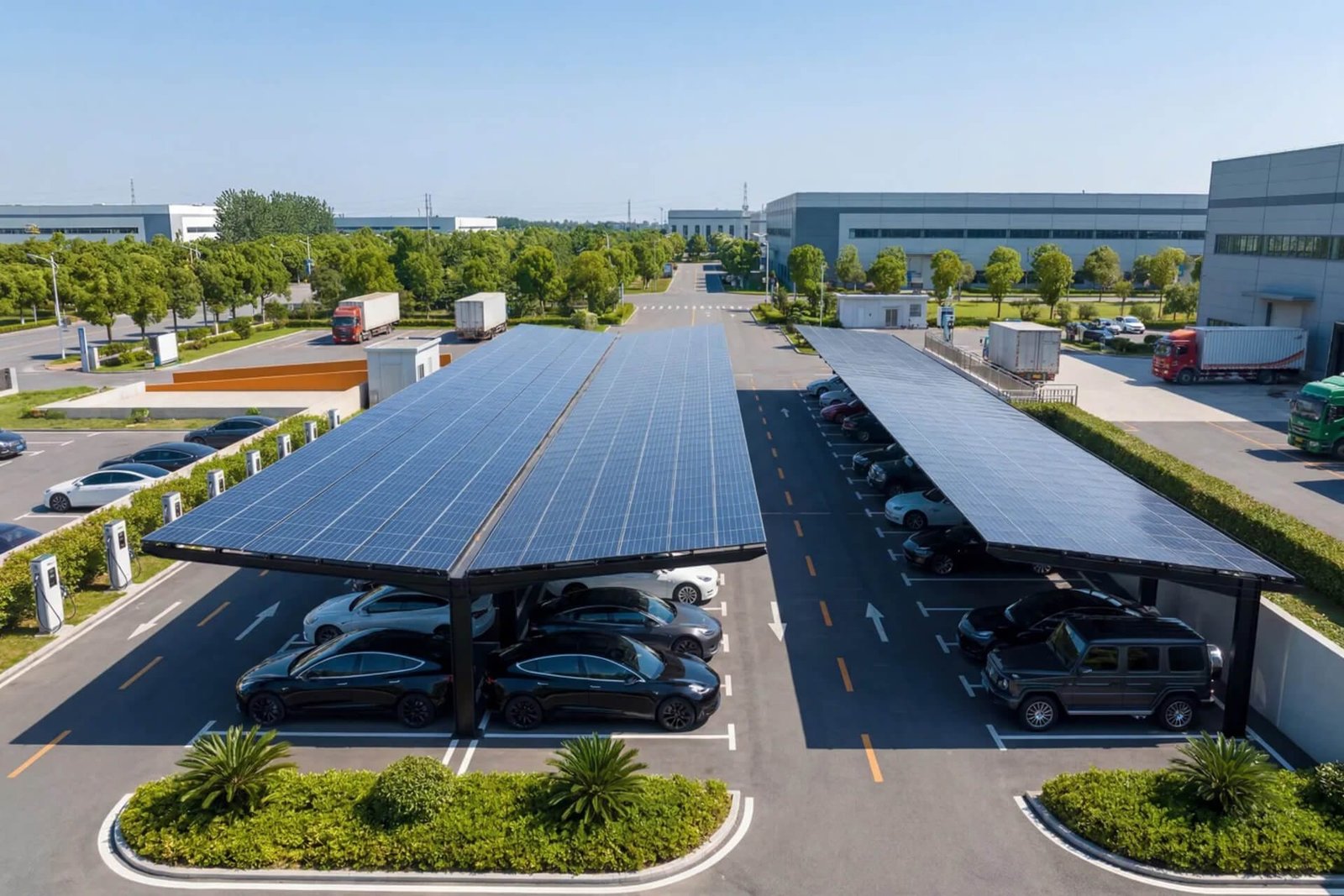
It’s the right question to ask. A solar carport is a capital investment, and for hotels, office parks, shopping centers, and fleet operators, it has to compete for budget against a dozen other projects. A carport that only provides shade is a cost; a carport that generates electricity, charges EVs, and protects vehicles is a revenue-producing asset. The difference is measurable — if you know how to run the math.
This guide is written for commercial buyers who are past the “should we consider solar?” stage and ready to build a defensible business case. We’ll walk through a concrete ROI model you can adapt to your own site, explain the variables that move the payback period most, and ground it in a real-world example from a project we delivered in Saudi Arabia — where intense sunlight makes the ROI case especially compelling.
By the end, you’ll be able to estimate your own payback period and know exactly what to ask a manufacturer to make the numbers solid.
1. Why a Solar Carport Beats Rooftop Solar for Commercial Properties
Before we touch the calculator, it’s worth understanding why carports are often the better solar play for commercial buyers — because this shapes the entire ROI equation.
You’re monetizing space you already own. A parking lot is dead space with a tax bill. A solar carport turns it into an energy asset without consuming a single square meter of new land. For hotels and retail properties where land is scarce or valuable, this is the single biggest advantage over ground-mount or rooftop arrays.
Dual revenue streams. A carport delivers value three ways at once: it generates electricity (savings or revenue), it enables EV charging (a premium service you can sell), and it protects vehicles from sun, hail, and heat (lower maintenance and higher customer satisfaction). Rooftop solar only does the first.
Vehicle protection is a real economic benefit. In hot climates, sun protection isn’t a nicety — it directly reduces vehicle interior degradation, protects paint, and cuts the “hot car” penalty that drives customers away. Our Saudi Arabia project is a case in point: the client’s primary motivation was protecting vehicles from extreme UV, and the result was a structure that also opened the door to future PV integration.
Structural clarity. Unlike retrofitting panels onto an aging roof, a purpose-built carport is engineered from day one to carry PV loads, conduits, and EV infrastructure — which means a cleaner, cheaper, more reliable installation.
Internal link opportunity: Understand what “solar-ready” really means at the structural level in our solar-ready carport engineering guide.
2. The ROI Model: Where the Money Comes From
A solar carport’s return comes from a handful of clear, quantifiable streams. Let’s break each down so you can plug in your own numbers.
2.1 Electricity generation (offset or revenue)
The core stream. Each kilowatt-hour (kWh) your array produces either offsets grid electricity you’d otherwise buy, or — under net metering or feed-in tariffs — becomes revenue you sell back. A typical commercial carport array produces roughly 1,100–1,500 kWh per kW of installed capacity per year, depending on latitude and sun hours. In high-irradiance markets like the Middle East, the upper end of that range is realistic.
2.2 EV charging revenue
If you add EV chargers, you create a service customers pay for. A hotel that offers EV charging can charge a per-session or per-kWh premium, attract EV-driving guests, and differentiate in a competitive market. This isn’t just revenue — it’s a booking driver.
2.3 Vehicle protection savings
Less obvious, but real: covered vehicles need less detailing, suffer less interior sun damage, and — in hail-prone regions — avoid costly bodywork. For fleets, this translates directly to lower maintenance and longer vehicle service life. For hotels, it’s a guest-satisfaction and loyalty lever.
2.4 Thermal benefit for adjacent buildings
A carport shades the lot itself, reducing the “heat island” effect and — when sited adjacent to a building — can modestly reduce cooling loads. It’s a secondary benefit, but it counts.
Internal link opportunity: If you’re still weighing carports against other structures, see how they compare in our aluminum structures comparison guide.
3. A Worked Example: The 20-Space Hotel Carport
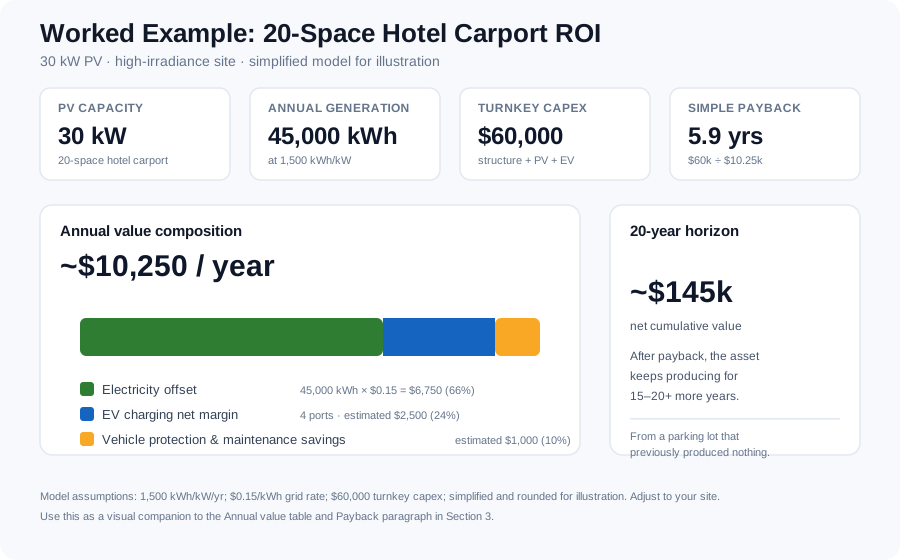
Numbers speak louder than theory. Here’s a simplified but realistic model for a 20-space commercial carport at a hotel, sized at roughly 30 kW of PV capacity. Adjust every figure to your own market.
Assumptions
- 30 kW PV array, generating ~45,000 kWh/year (at 1,500 kWh/kW, a high-irradiance site)
- Grid electricity cost: $0.15/kWh
- Installed carport cost (structure + PV + EV, turnkey): $60,000
Annual value
| Revenue stream | Calculation | Annual value |
| Electricity offset | 45,000 kWh × $0.15 | $6,750 |
| EV charging (4 ports, premium markup) | estimated net margin | $2,500 |
| Vehicle protection & maintenance savings | estimated | $1,000 |
| Total annual value | ~$10,250 |
Payback
- $60,000 ÷ $10,250 ≈ 5.9 years
At the end of the payback period, you own an asset that keeps producing value for the remaining 15–20+ years of its design life. Over a 20-year horizon, that’s roughly $145,000 in net cumulative value — from a parking lot that previously produced nothing.
Why this number moves: your electricity rate is the single biggest lever. At $0.20/kWh, payback drops toward ~4.5 years. At $0.10/kWh, it stretches past 8. This is why the same carport is a slam-dunk in a high-rate, high-sun market and a “nice-to-have” elsewhere. Run your own numbers before you believe any vendor’s blanket claim.
Internal link opportunity: For the structural and electrical planning that makes this build possible, read our site preparation and installation guide.
4. The Variables That Move Payback the Most
If you want to shorten your payback period, focus on these four levers — they matter more than almost anything else.
1. Solar irradiance. This is your site’s “fuel.” High-sun regions (Middle East, Southern Europe, US Sun Belt, Australia, Southeast Asia) produce dramatically more kWh per kW. A carport in Riyadh is a different investment than the same carport in London. This is why our Saudi Arabia project began with UV protection — and why that same site is ideal for future PV.
2. Electricity price. Your grid rate determines what each kWh is worth. High commercial rates or peak-demand charges make solar economics shine. If your utility has time-of-use pricing, the ability to offset peak power is worth even more than the average rate suggests.
3. Incentives. Tax credits, feed-in tariffs, grants, and accelerated depreciation can shave years off payback. These vary by country and region — and they change, so verify current programs with a local advisor before finalizing your model.
4. Structure cost and longevity. A cheap carport that corrodes in five years destroys the ROI it promised. An aluminum structure with a 10-year structural warranty — like the one we built for our Saudi client — protects the investment over the full depreciation window. This is why the structure is a financial decision, not just an engineering one.
Internal link opportunity: Learn how to specify a carport that actually lasts in our heavy-duty aluminum carports guide.
5. Case Study: Saudi Arabia — Where the Sun Makes ROI Compelling
The economics of solar are never more obvious than in a desert climate. Here’s how one project came together.
The challenge. A homeowner in Saudi Arabia faced intense year-round sun, extreme temperatures, and high UV radiation that was rapidly degrading vehicle paintwork and interiors. Beyond the carport itself, the client wanted to source directly from a reliable “Made in China” manufacturer to secure factory-direct pricing and premium quality — bypassing expensive local middlemen.
The solution. We supplied a heavy-duty cantilever aluminum carport, customized in an elegant dark brown finish and paired with imported UV-blocking polycarbonate roof panels that filter out 98% of harmful rays. The project was backed by a 10-year structural warranty, shipped via sea freight with full logistics handling, and supported by step-by-step remote installation guidance from our engineering team.
The ROI insight. This project began as a vehicle-protection investment — but the same structure is fundamentally PV-ready. In a high-irradiance market like Saudi Arabia, adding solar to a carport like this converts a pure cost (shade) into a compounding revenue asset, with payback periods that are among the shortest in the world. The lesson for commercial buyers: specify solar-ready from the start, even if you don’t install panels on day one. Retrofitting is always more expensive than building the capacity in.
Internal link opportunity: Read the full story and see the finished structure in our Saudi Arabia carport case study, or browse more customer stories.
6. A Buyer’s Checklist: Getting the ROI Numbers Right
Before you commit, verify these five things so your model survives contact with reality.
- Get a site-specific irradiance estimate. Not a vendor’s generic “your site is great” — a real solar-hours figure for your exact location.
- Confirm your utility rate and tariff structure. Know whether you’re offsetting at average or peak rates, and whether net metering applies.
- Verify current incentives. Tax credits and feed-in tariffs change frequently; confirm with a local advisor, not a sales rep.
- Ask for structural and warranty specifics. A 10-year structural warranty and 6063-T5 aluminum are non-negotiables for a long ROI horizon.
- Specify solar-ready, not just “solar possible.” Pre-engineered PV loads, conduit pathways, and EV integration save real money versus retrofitting later.
Internal link opportunity: Before you shortlist a factory for a project this capital-intensive, learn how to audit them properly in our B2B factory audit guide.
7. Conclusion: Do the Math, Then Build It Right
A solar carport is one of the rare commercial investments that pays for itself twice — once in energy and EV revenue, and again in the vehicles and customers it protects. But the returns only materialize if two things are true: the numbers work for your site (irradiance, electricity price, incentives), and the structure is engineered to last long enough to collect them.
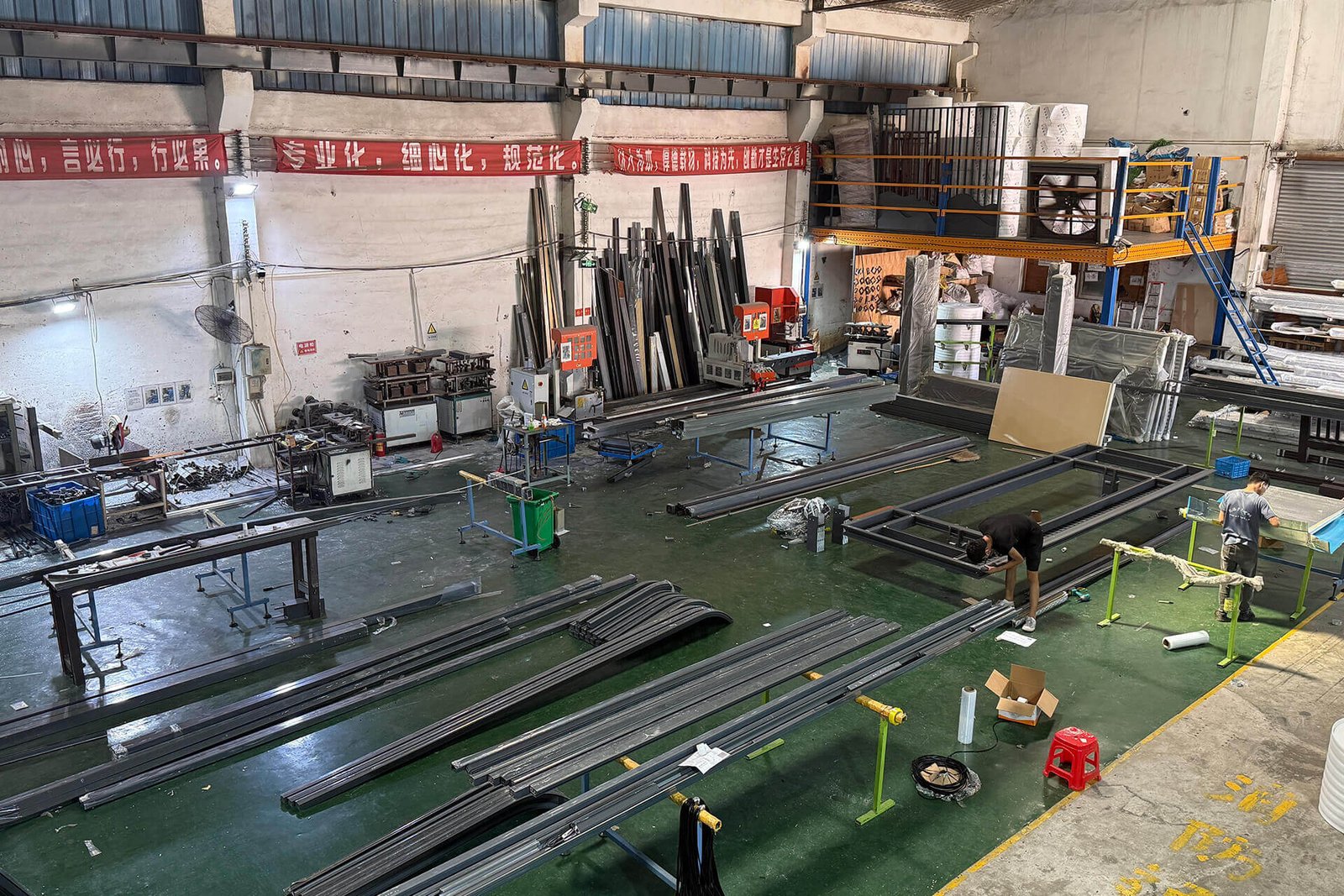
That’s where the manufacturer matters. At Oudeoutdoor, we build heavy-duty aluminum carports in our 15,000㎡ automated facility — solar-ready by design, backed by 10-year structural warranties, and delivered worldwide with full OEM/ODM support. Whether you’re specifying a single hotel carport or a multi-site portfolio, our team can help you run the numbers and build a structure that makes them real.
Want a custom ROI estimate for your project? Send us your site location, space count, and electricity rate, and our team will return a tailored financial model and quote within 24 hours.