Introduction: Why Certifications Are the First Filter in B2B Sourcing
When you shortlist suppliers for an aluminum pergola, carport, or canopy project, the first thing you look for — before pricing, before lead times, before design — is proof that the factory can actually deliver what it promises. That proof usually shows up as a row of acronyms on a website footer: CE, ISO 9001, TÜV, SGS.
But here’s the uncomfortable truth about this industry: not all certifications are created equal, and not every badge you see online is real. Some are years out of date. Some cover only a narrow product scope that has nothing to do with the structure you’re actually buying. And some are simply copied from another manufacturer’s website.
This article is our attempt to be transparent about ours. We’ll walk through what each of our certifications — CE, ISO 9001, TÜV, and SGS — actually means, what it covers, what it does not cover, and how you can verify any supplier’s claims, including our own. Because in B2B sourcing, a certificate is only worth as much as the process behind it.
Internal link opportunity: If you’re planning a factory visit, our B2B factory audit and quality control guide walks you through exactly what to check when you walk the floor.
1. Why Certifications Matter in B2B Sourcing
1.1 They’re a pre-filter, not a guarantee
A certificate is best understood as a pre-filter, not a promise. It answers one question efficiently: has an independent third party, at some point, confirmed that this factory operates to a recognized standard? It does not, by itself, tell you whether the specific batch you receive will be perfect.
That said, the absence of credible certification is an immediate red flag — and the presence of the right certifications is one of the fastest ways to narrow a long supplier list down to a shortlist.
1.2 Three concrete things good certification buys you
- Market access. CE marking is a legal requirement for placing many construction products on the EU market. Without it, your European project can stall at customs or fail building inspection.
- Quality consistency. ISO 9001 is about process, not a one-off test. It means the factory has a repeatable quality system — so unit 101 is built the same way as unit 1.
- Independent proof. TÜV and SGS are third-party bodies that don’t have a stake in your order. Their reports carry more weight than a manufacturer’s own claims.
2. CE: Your Gateway to the European Market
CE marking (Conformité Européenne) is the manufacturer’s declaration that a product meets the health, safety, and environmental requirements of the relevant EU directives and regulations.
For aluminum outdoor structures — pergolas, carports, canopies, and awnings — CE marking signals that the product has been assessed against the applicable European standards for structural safety and performance. This matters in two very practical ways for B2B buyers:
- It clears the path for EU projects. Specifiers, architects, and building authorities in Europe increasingly require CE-marked structures. A supplier without CE can cost you weeks of compliance paperwork — or disqualify you from a tender entirely.
- It’s a legal statement, not a marketing line. Because CE is a declaration backed by technical documentation, a legitimate CE mark means the manufacturer has done the engineering and testing to support it. Ask for the Declaration of Performance (DoP) — if a supplier can’t produce one, treat the CE claim with suspicion.
2.1 What to ask a supplier about their CE mark
- Which specific product range does the CE mark cover? A CE for lighting is not a CE for a structural pergola.
- Can you provide the Declaration of Performance and test reports?
- Which notified body (if any) was involved in the assessment?
Internal link opportunity: CE compliance is built on structural engineering. To understand the load requirements behind it, see our guide on wind and snow load engineering.
3. ISO 9001: A Quality System, Not Just a Logo
ISO 9001 is the world’s most recognized standard for quality management systems. Crucially, it does not certify the product — it certifies the process that produces it.
An ISO 9001-certified factory operates with documented procedures for everything from incoming material inspection to final inspection before dispatch. That translates into outcomes buyers actually care about:
- Fewer defects and rework — problems are caught at the source, not shipped to you.
- Traceability — every order can be traced back to its material batch and production records.
- Continuous improvement — the system requires the factory to measure, review, and improve, year after year.
For a buyer, the practical question is simpler: would you rather order from a factory that has a documented quality system, or one that relies on the skill of whoever happens to be on shift that day?
4. TÜV & SGS: Independent, Third-Party Verification
Where CE is a self-declaration and ISO 9001 is a management system, TÜV and SGS are something different again: they are independent testing, inspection, and certification bodies.
- TÜV (Technischer Überwachungsverein) is a family of German technical inspection associations — globally recognized for rigorous testing of products, materials, and safety.
- SGS is the world’s largest testing, inspection, and certification company, operating in virtually every country.
When a factory’s products or materials have been tested by TÜV or SGS, it means an organization with no financial stake in your order has verified specific properties — for example, material strength, corrosion resistance, or structural performance under load. This third-party independence is precisely what makes these reports more credible than a supplier’s own marketing claims.
4.1 Where independent testing matters most
For an aluminum pergola or carport, the properties that must be independently verified are the ones you can’t judge by eye: the structural capacity of the profiles, the coating’s corrosion resistance, and the assembly’s performance under wind and snow load.
Internal link opportunity: See how that engineering translates to real site conditions in our custom aluminum structures planning guide.
5. Inside the Factory: What Certification Looks Like in Practice
A certificate is a piece of paper. The real test is whether the factory lives by the system it claims. Here’s what that looks like on our floor — captured as it actually is, not staged for a brochure.
A dedicated inspection area. The single most important thing we can show you isn’t a machine — it’s a sign. Our floor is divided into clearly marked zones: Finished Goods Area, Assembly Area, and a dedicated Quality Inspection Area. That physical separation is the ISO 9001 principle made visible: inspection is a distinct, mandatory stage in the process, not an afterthought done on the same bench as assembly.
Quality inspection area sign inside our 5s managed aluminum fabrication facility
Structured material handling. Overhead cranes move long aluminum profiles without the damage that comes from manual handling — the kind of damage that shows up later as scratches, dents, or micro-bends a buyer discovers only after the container arrives.
Overhead crane and production platform in our aluminum fabrication facility
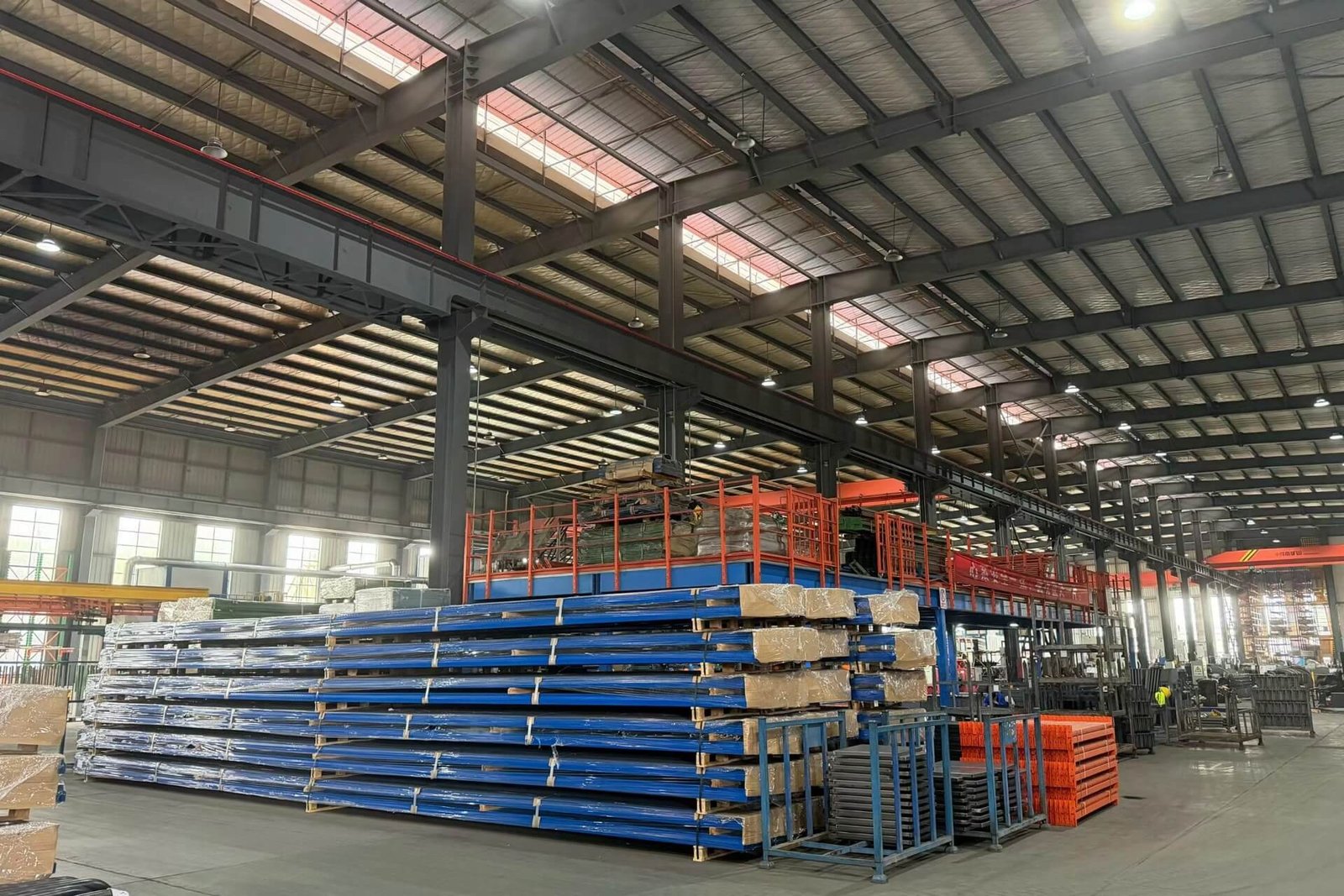
Controlled finished-goods storage. Packaged, wrapped, and palletized finished goods — not loose material piled on a floor — tell you the factory controls quality all the way to the loading dock. How a factory treats its finished product says more about its quality culture than any single certificate.
Packaged aluminum profiles and finished goods in our warehouse under an overhead crane
Trained assembly teams. Assembly is where most quality problems are born — misaligned joints, overtightened fasteners, uneven gaskets. Trained assemblers working to documented procedures are what keep a 300-unit container order consistent from the first frame to the last.
Workers assembling a large aluminum pergola frame on the production floor
Assembly line workers building an aluminum outdoor structure
A real showroom. Our in-house showroom lets you see the finished product — not a rendering, not a catalog photo. Being able to stand under the actual product before you commit is the closest thing to certainty this industry offers.
Finished aluminum pergola on display in our factory showroom
5.1 The short version
Certifications tell you the system should work. A zoned, 5S-managed floor with a dedicated inspection area and a real showroom is the evidence that it does work. Both matter; the second one is harder to fake.
Internal link opportunity: See the facility, production lines, and quality systems in detail in our manufacturing facility upgrade announcement.
6. Our Warranty: The Promise Behind the Paper
Certifications describe how we work. A warranty describes what happens if something still goes wrong. Both belong in the same conversation.
We back our aluminum structures with a structural warranty — up to 10 years on the frame, depending on the product line — because the same engineering and testing that support our certifications also tell us how long these structures are built to last. A warranty is only meaningful if the company behind it will still exist in ten years; with 18+ years in this industry and an OEM/ODM operation serving distributors worldwide, we plan to be.
6.1 What a structural warranty should actually cover
- Frame and structure — not just finish (finish warranties are cheap to offer and often near-worthless).
- A defined period and scope — “lifetime warranty” with no definition is a red flag.
- A real claims process — who do you contact, and how fast do they respond?
For buyers placing large or repeat orders, we’re happy to provide our OEM/ODM solutions and warranty terms in writing before you commit.
7. How to Verify Any Supplier’s Certifications
Here’s the part most suppliers won’t tell you — because we’d rather you verify than trust, here’s how to check any factory’s certificates, including ours.
7.1 Four checks that separate real certificates from fake ones
- Ask for the certificate number and issuing body. A real certificate has a unique number you can look up. A logo alone is meaningless.
- Check the scope. Does the certificate cover your product category, or something unrelated — a CE for electronics, an ISO for a different division?
- Check the validity dates. Certifications expire and must be renewed. An expired certificate is a removed certificate.
- Cross-check with the issuing body. ISO certificates are listed by the registrar; TÜV and SGS reports can be verified with the issuing office. If a supplier hesitates to let you verify, that’s your answer.
7.2 The fastest shortcut
The single fastest way to verify everything at once is to walk the floor yourself — or send someone who can. Our B2B factory audit and quality control guide gives you a point-by-point checklist, and you’re welcome to apply every line of it to us.
8. Conclusion: Trust, but Verify — Starting With Us
CE, ISO 9001, TÜV, and SGS aren’t decorations for a website footer. They’re a statement about how a factory operates: a legal declaration of conformity, a documented quality system, and independent third-party verification. Combined with a zoned, inspection-driven floor and a structural warranty, they’re the closest thing to certainty you can get before you place an order.
The rest — actually verifying it — is your job, and we’d genuinely welcome it. Ask us for certificate numbers, scopes, and test reports. Apply our own audit checklist against us. Visit the floor.
Ready to verify a factory that invites scrutiny? Send us your project requirements and request our certificate documentation, and our team will respond within 24 hours.